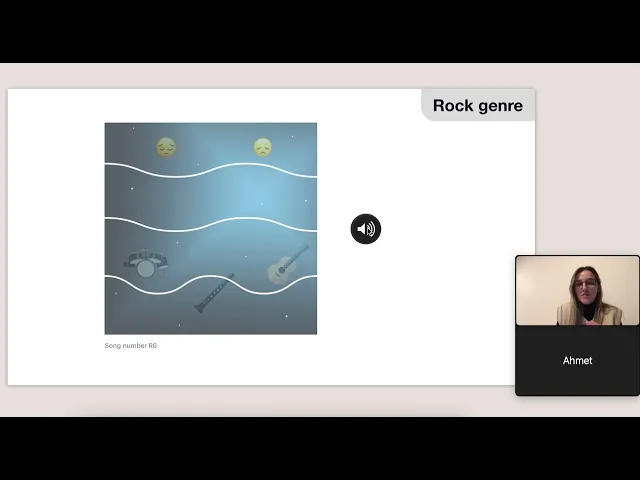

Music visualisation
During my MSc in Human-Computer Interaction Design, I conducted a three-month dissertation project aimed at enhancing music discovery. Instead of using traditional recommendation systems, I decided to develop a visualisation system to display the characteristics of each song. This unique approach made it more efficient and enjoyable for users to find music that suited their preferences.
Research
Data visualisation
Concept design
My role
Defined the research direction and success criteria
Researched and analysed song data and audio features
Designed visual concepts to support music discovery
Planned and ran user evaluation sessions
Synthesised findings into design principles
Problem
People find it difficult to discover new songs because of the overwhelming number of available options. Despite their enjoyment of new music, they often find themselves defaulting to old familiar songs.
Solution
Through analysis and research into song preferences, I discovered a creative method to present more information about songs using visualisations, helping users make informed decisions.
Impact
The dissertation received the Outstanding Project Award, recognising the strength of its research, design approach, and exploration of a new way to support music discovery through visualisation and audio cues.
Music visualisation
During my MSc in Human-Computer Interaction Design, I conducted a three-month dissertation project aimed at enhancing music discovery. Instead of using traditional recommendation systems, I decided to develop a visualisation system to display the characteristics of each song. This unique approach made it more efficient and enjoyable for users to find music that suited their preferences.
Research
Data visualisation
Concept design
My role
Defined the research direction and success criteria
Researched and analysed song data and audio features
Designed visual concepts to support music discovery
Planned and ran user evaluation sessions
Synthesised findings into design principles
Problem
People find it difficult to discover new songs because of the overwhelming number of available options. Despite their enjoyment of new music, they often find themselves defaulting to old familiar songs.
Solution
Through analysis and research into song preferences, I discovered a creative method to present more information about songs using visualisations, helping users make informed decisions.
Impact
The dissertation received the Outstanding Project Award, recognising the strength of its research, design approach, and exploration of a new way to support music discovery through visualisation and audio cues.
Music visualisation
During my MSc in Human-Computer Interaction Design, I conducted a three-month dissertation project aimed at enhancing music discovery. Instead of using traditional recommendation systems, I decided to develop a visualisation system to display the characteristics of each song. This unique approach made it more efficient and enjoyable for users to find music that suited their preferences.
Research
Data visualisation
Concept design
My role
Defined the research direction and success criteria
Researched and analysed song data and audio features
Designed visual concepts to support music discovery
Planned and ran user evaluation sessions
Synthesised findings into design principles
Problem
People find it difficult to discover new songs because of the overwhelming number of available options. Despite their enjoyment of new music, they often find themselves defaulting to old familiar songs.
Solution
Through analysis and research into song preferences, I discovered a creative method to present more information about songs using visualisations, helping users make informed decisions.
Impact
The dissertation received the Outstanding Project Award, recognising the strength of its research, design approach, and exploration of a new way to support music discovery through visualisation and audio cues.
Why music discoverability
Do you keep listening to the same old tunes?
Finding new music is tough with current systems. That's why I've turned to visualising songs to give users information cues, a technique commonly used in information architecture.
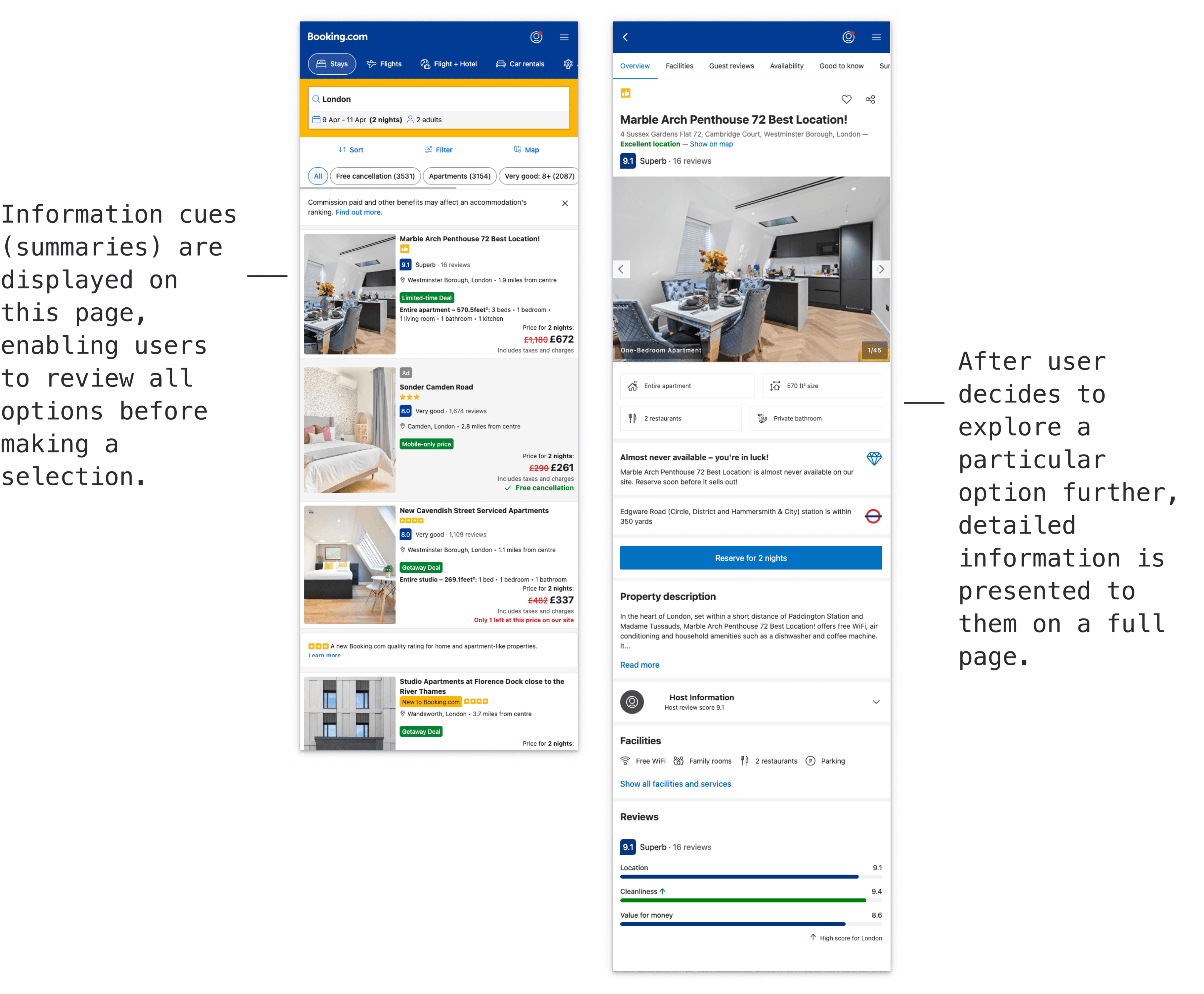
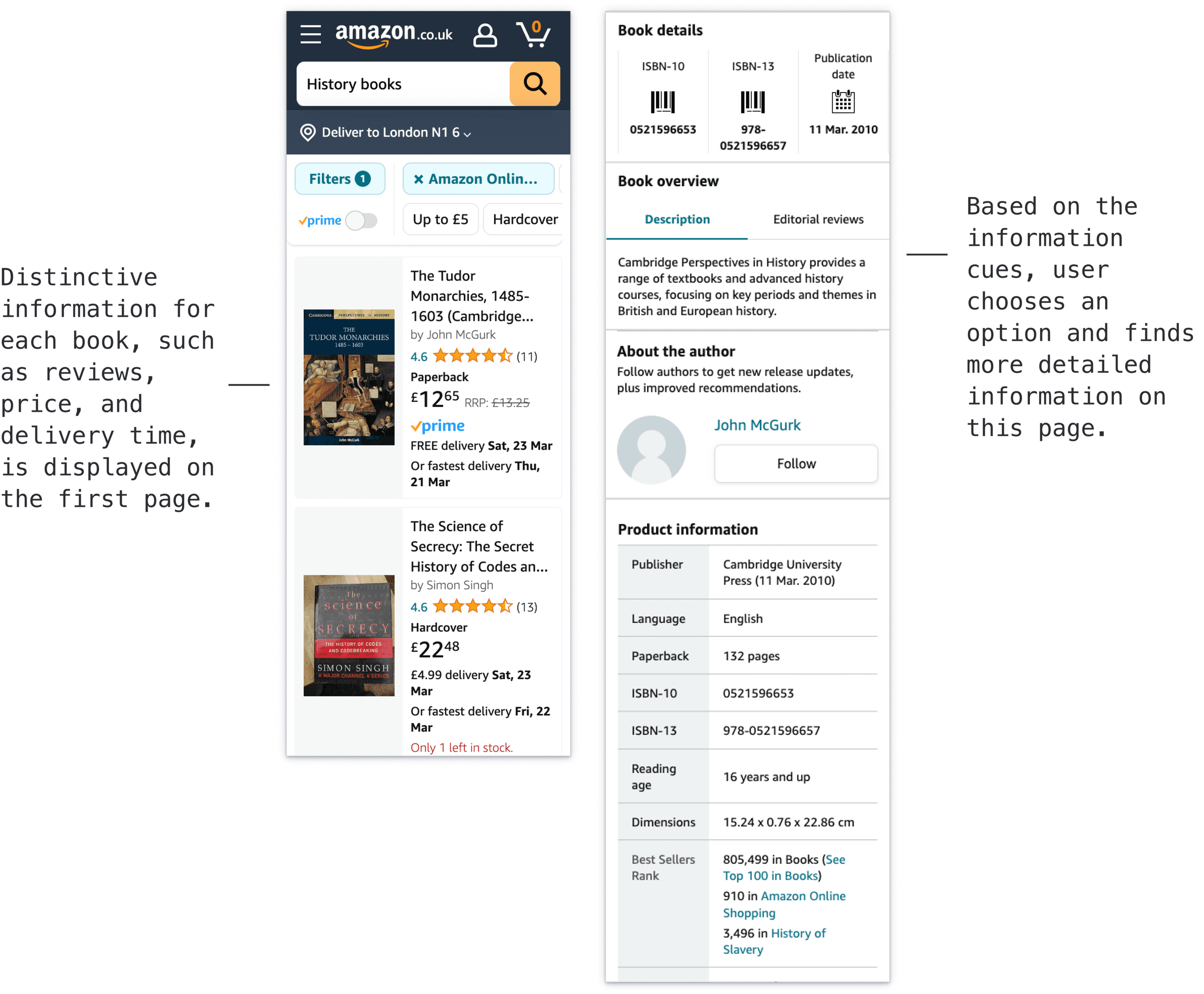
Many apps use this method to help users find what they're looking for. For instance, booking.com provides summaries of accommodations, and Amazon search results show necessary product details.
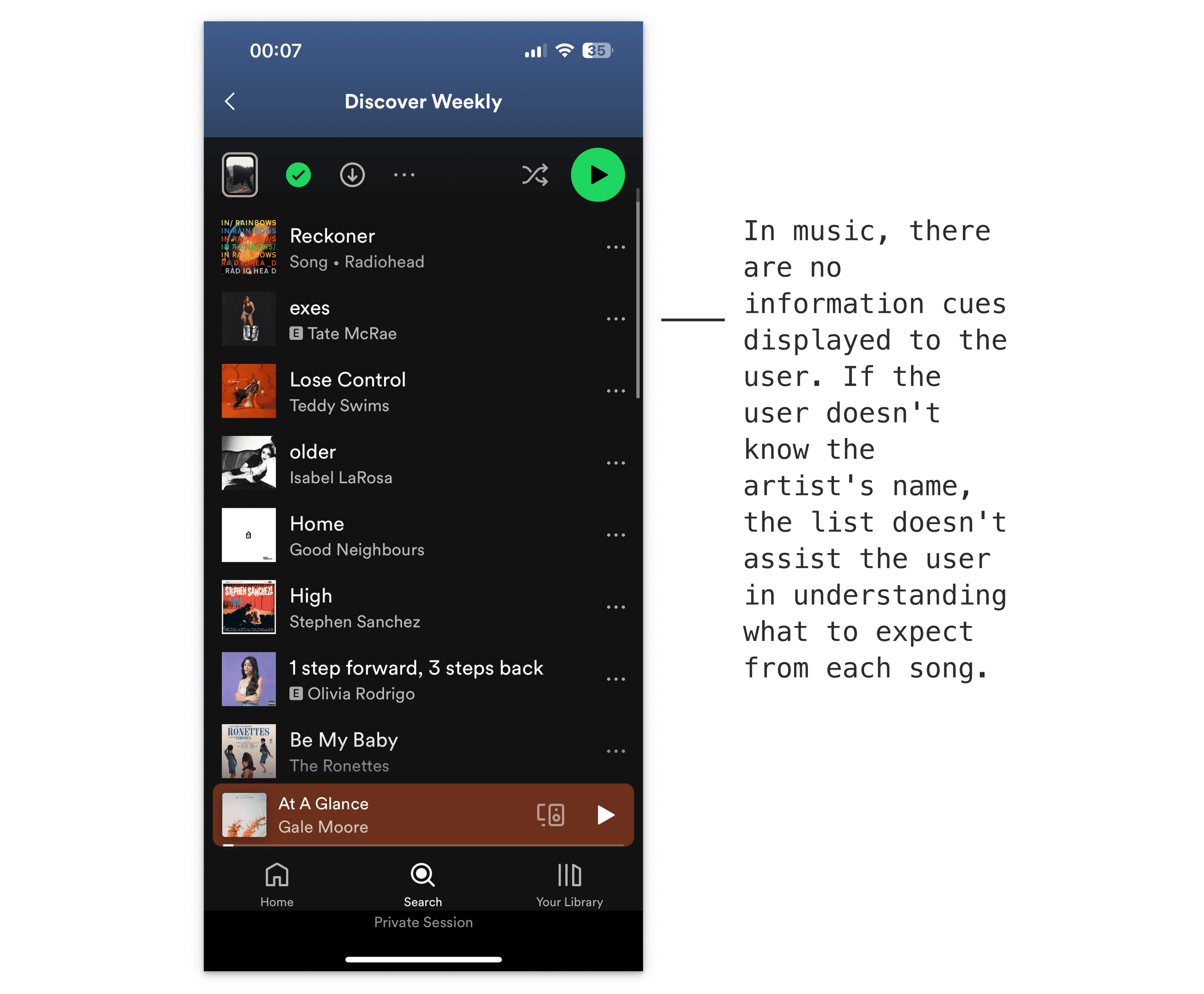
Yet, in the music domain, we often limit information to song title, artist, and album cover, which doesn't offer much insight, especially for new songs.
Why music discoverability
Do you keep listening to the same old tunes?
Finding new music is tough with current systems. That's why I've turned to visualising songs to give users information cues, a technique commonly used in information architecture.
Many apps use this method to help users find what they're looking for. For instance, booking.com provides summaries of accommodations, and Amazon search results show necessary product details.
Yet, in the music domain, we often limit information to song title, artist, and album cover, which doesn't offer much insight, especially for new songs.
Why music discoverability
Do you keep listening to the same old tunes?
Finding new music is tough with current systems. That's why I've turned to visualising songs to give users information cues, a technique commonly used in information architecture.
Many apps use this method to help users find what they're looking for. For instance, booking.com provides summaries of accommodations, and Amazon search results show necessary product details.
Yet, in the music domain, we often limit information to song title, artist, and album cover, which doesn't offer much insight, especially for new songs.
Booking.com example:
Amazon example:
Spotify example:
Booking.com example:
Amazon example:
Spotify example:
Booking.com example:
Amazon example:
Spotify example:
Goals
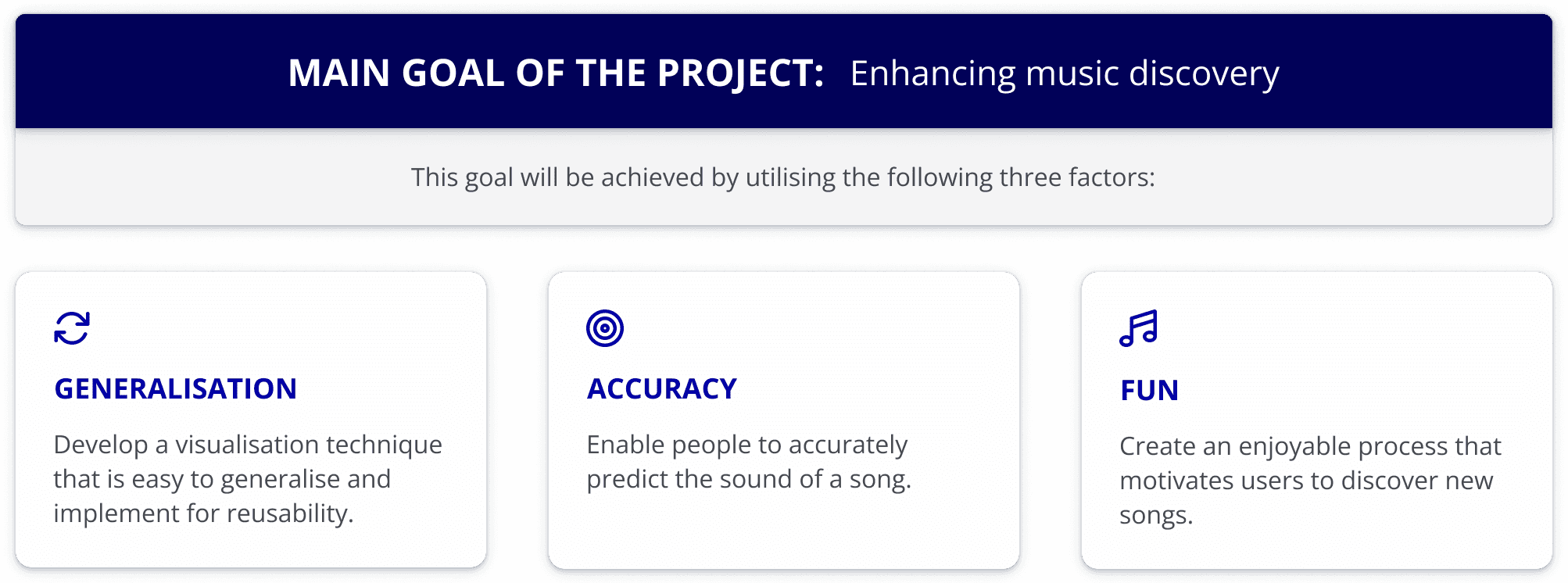
Before starting the work, I outlined the project goals. The main aim is to improve music discovery, with subgoals to support it.
Generalisation is key for a reusable system, accuracy is the essential part, and ensuring user enjoyment is vital for engagement.
Goals
Before starting the work, I outlined the project goals. The main aim is to improve music discovery, with subgoals to support it.
Generalisation is key for a reusable system, accuracy is the essential part, and ensuring user enjoyment is vital for engagement.
Goals
Before starting the work, I outlined the project goals. The main aim is to improve music discovery, with subgoals to support it.
Generalisation is key for a reusable system, accuracy is the essential part, and ensuring user enjoyment is vital for engagement.
What's known
To understand the big picture: focus on details
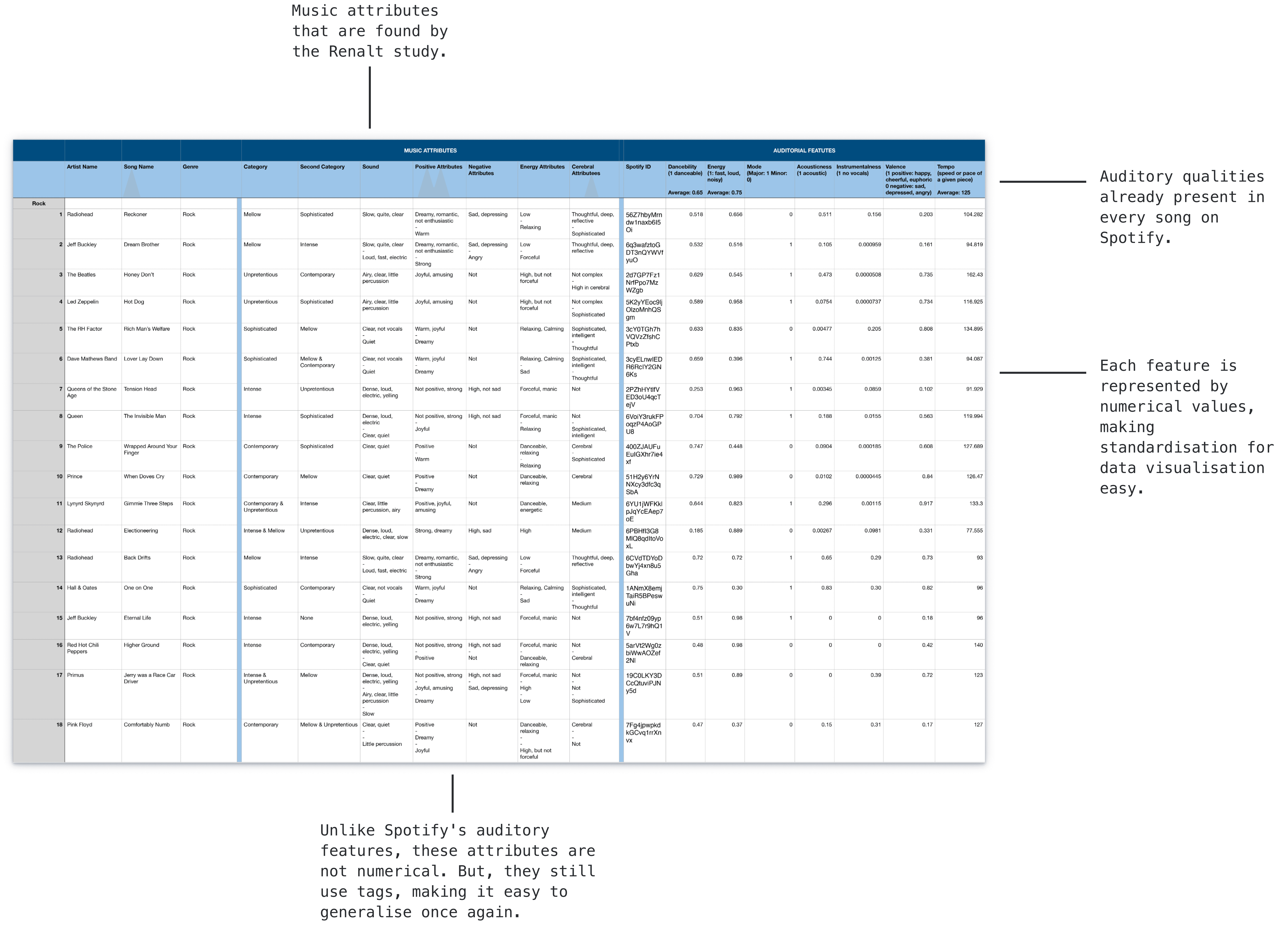
I began my project by studying music preferences, classification, discoverability, and song visualisation. This research helped me grasp how songs vary and why some are liked more than others.
Then, I chose some songs and identified their characteristics based on this research. I also used the audio features provided by Spotify.
What's known
To understand the big picture: focus on details
I began my project by studying music preferences, classification, discoverability, and song visualisation. This research helped me grasp how songs vary and why some are liked more than others.
Then, I chose some songs and identified their characteristics based on this research. I also used the audio features provided by Spotify.
What's known
To understand the big picture: focus on details
I began my project by studying music preferences, classification, discoverability, and song visualisation. This research helped me grasp how songs vary and why some are liked more than others.
Then, I chose some songs and identified their characteristics based on this research. I also used the audio features provided by Spotify.
First stage ideation
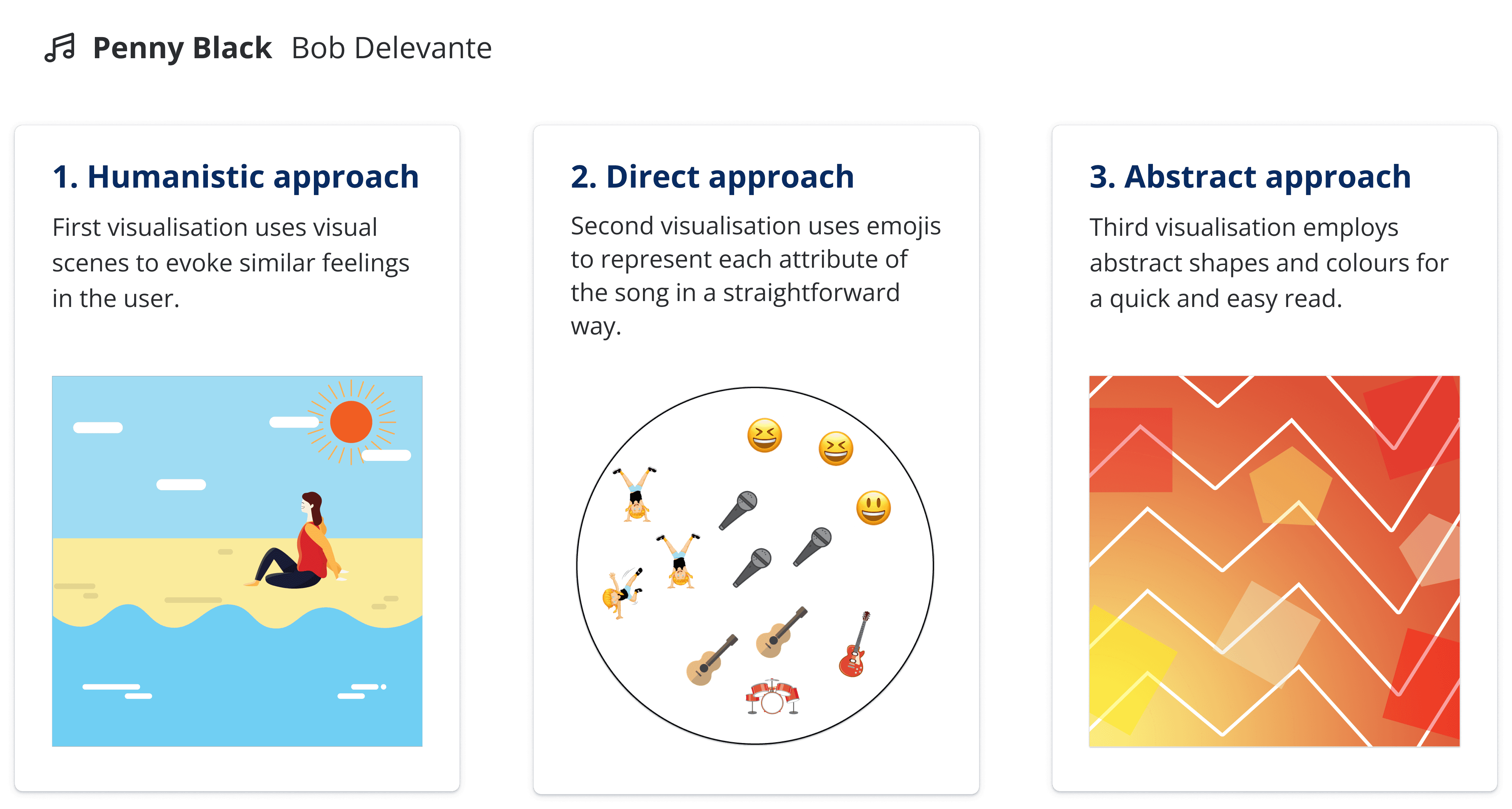
With the project goals of generalisation, accuracy, and enjoyment in mind, I experimented with three different visualisation techniques to display the songs data.
First stage ideation
With the project goals of generalisation, accuracy, and enjoyment in mind, I experimented with three different visualisation techniques to display the songs data.
First stage ideation
With the project goals of generalisation, accuracy, and enjoyment in mind, I experimented with three different visualisation techniques to display the songs data.
Evaluation & Analysis
In my evaluations, I focused on two key points:
Interpretation of Visualisations: Participants discussed visualisations before hearing songs.
Effectiveness of Visualisations: After listening, participants rated song matches to expectations.
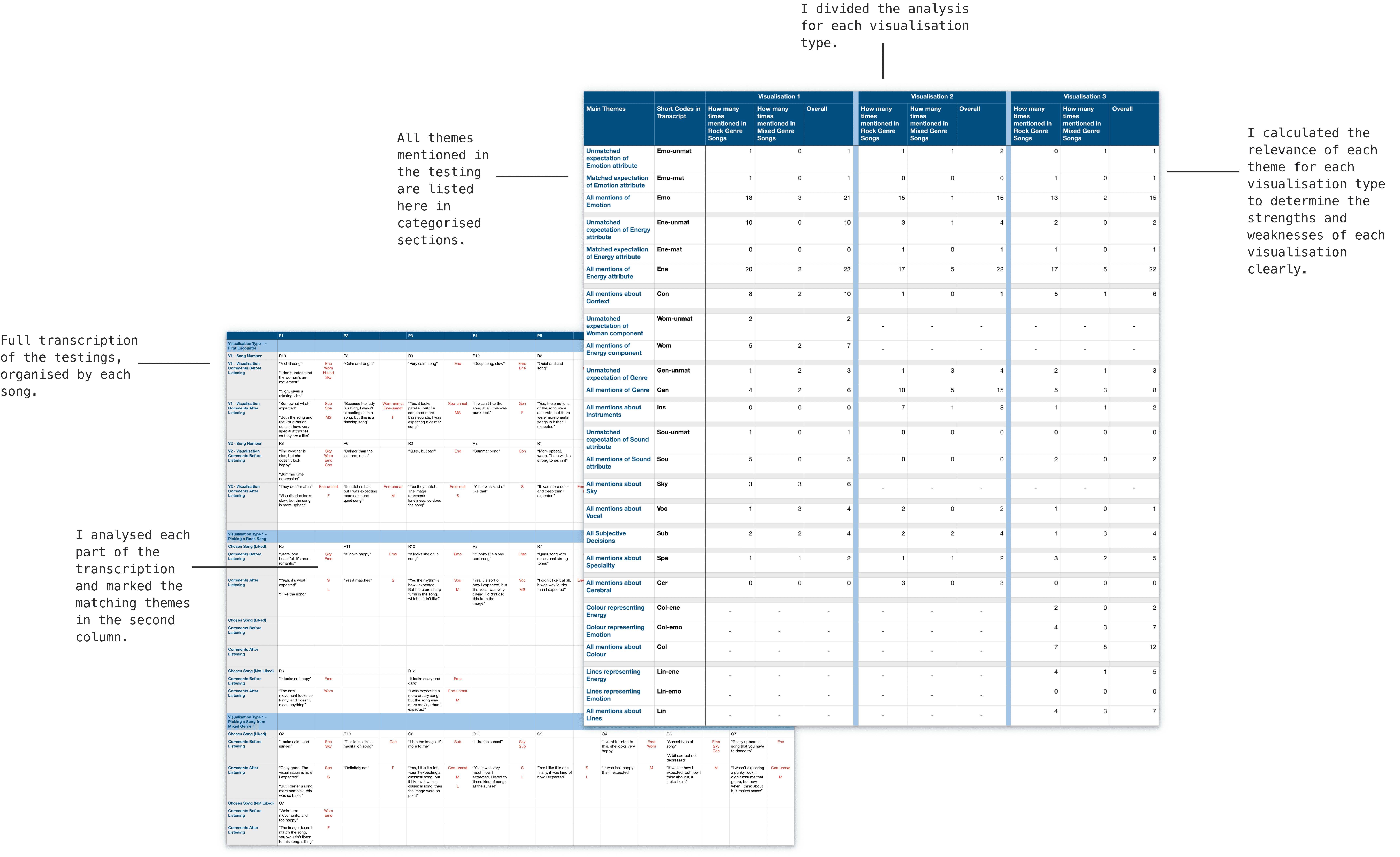
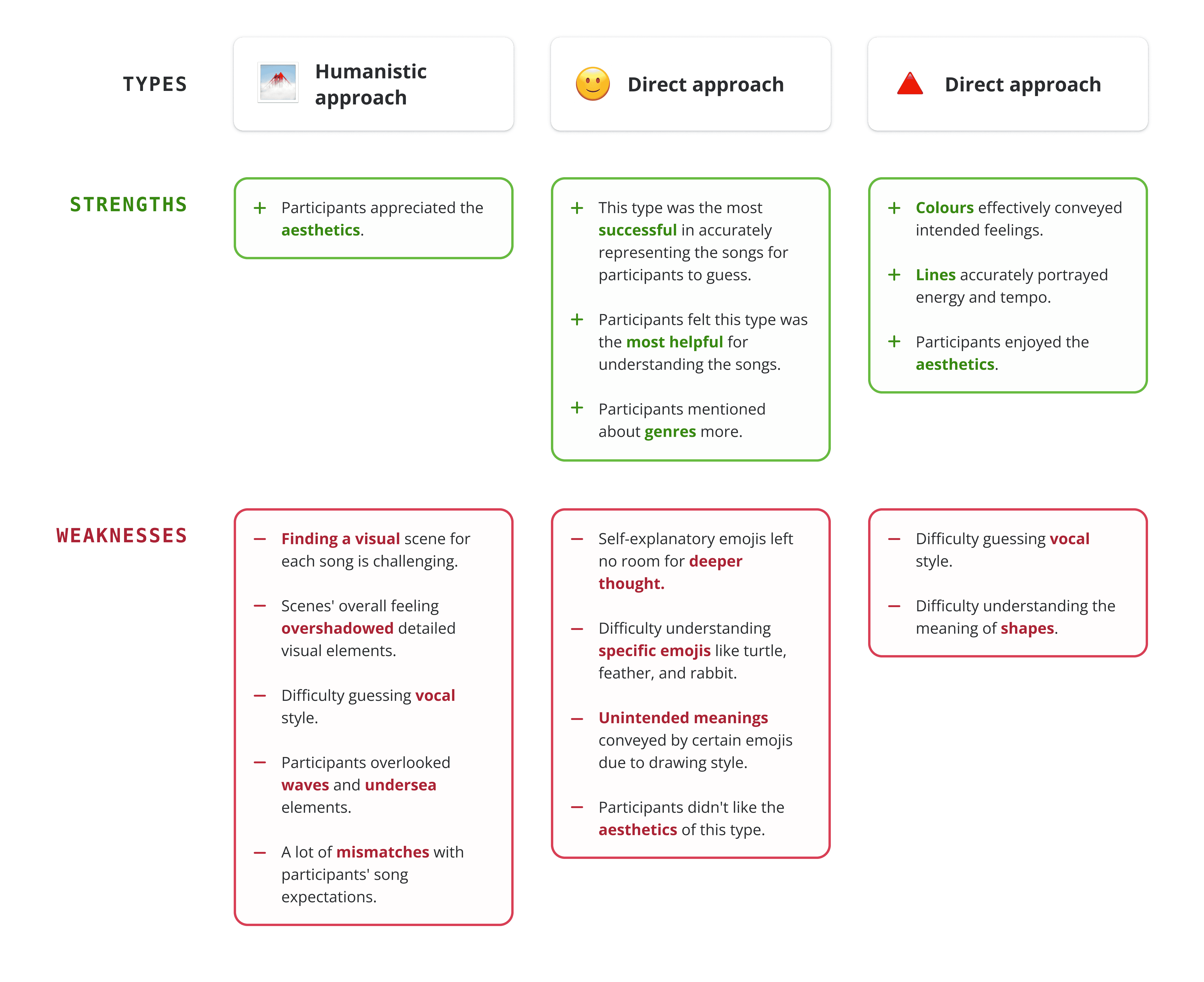
After reviewing 20 songs with 8 participants, I conducted a thematic analysis to assess strengths and weaknesses of each visualisation type.
Evaluation & Analysis
In my evaluations, I focused on two key points:
Interpretation of Visualisations: Participants discussed visualisations before hearing songs.
Effectiveness of Visualisations: After listening, participants rated song matches to expectations.
After reviewing 20 songs with 8 participants, I conducted a thematic analysis to assess strengths and weaknesses of each visualisation type.
Evaluation & Analysis
In my evaluations, I focused on two key points:
Interpretation of Visualisations: Participants discussed visualisations before hearing songs.
Effectiveness of Visualisations: After listening, participants rated song matches to expectations.
After reviewing 20 songs with 8 participants, I conducted a thematic analysis to assess strengths and weaknesses of each visualisation type.
Approach
Main findings
Approach
Main findings
Approach
Main findings
Second stage ideation
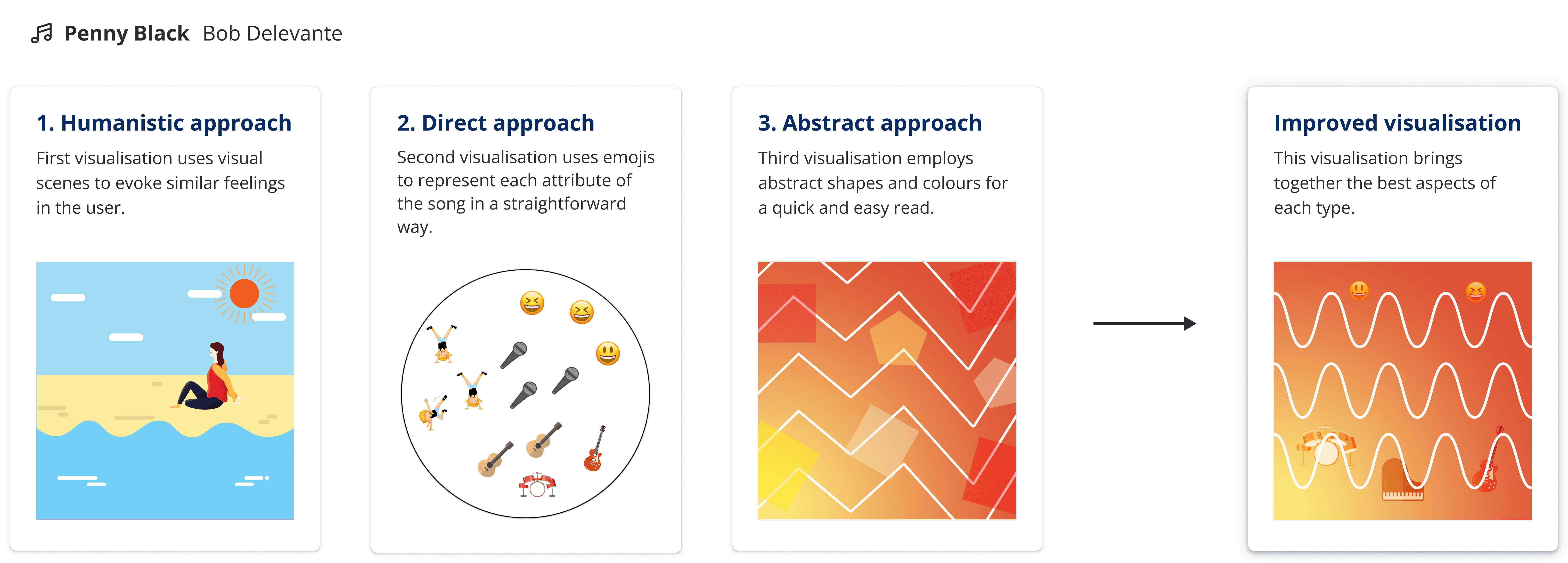
Crafting the Perfect Blend
Based on the findings, I merged successful elements to form a new visualisation. This allowed me to verify if the right combination of visuals could capture a song's essence.
Second stage ideation
Crafting the Perfect Blend
Based on the findings, I merged successful elements to form a new visualisation. This allowed me to verify if the right combination of visuals could capture a song's essence.
Second stage ideation
Crafting the Perfect Blend
Based on the findings, I merged successful elements to form a new visualisation. This allowed me to verify if the right combination of visuals could capture a song's essence.
Final evaluation
Testing effectiveness
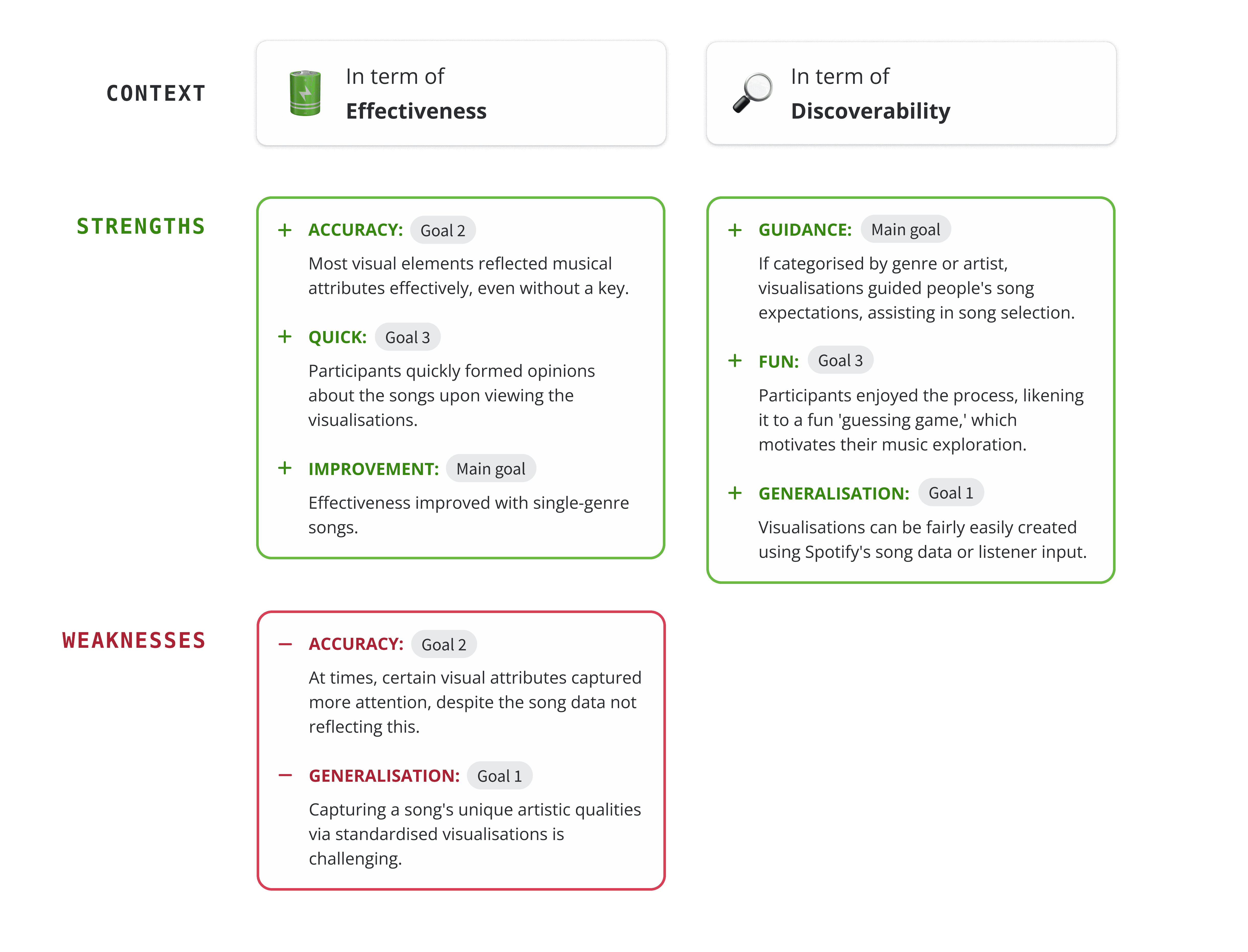
In the second evaluation, my focus shifted towards assessing the effectiveness of the visuals rather than comparing them.
Additionally, I divided the sessions into two parts: first, participants listened to songs from various genres, then exclusively to rock songs to refine their expectations.
Possible use of these designs on Spotify
Possible use of these designs on Spotify
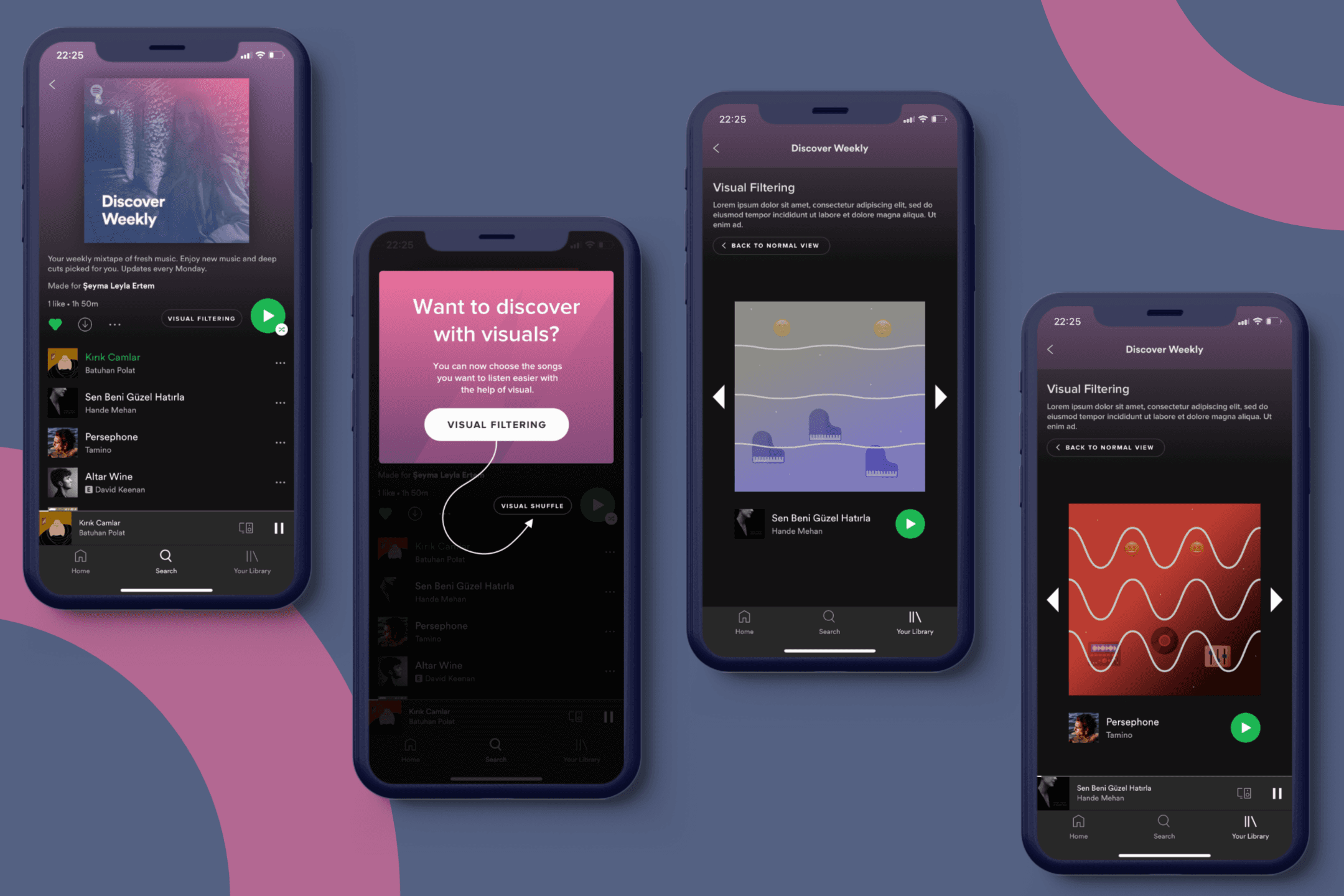
Possible use of these designs on Spotify
Reflection
There's much to explore
I believe the project was successful because I stayed focused on its core goals and adjusted the direction based on research findings and testing results.
Beyond strengthening my design and testing skills, the project taught me a lot about strategic thinking and creative problem-solving. It also showed me the potential of using musical cues to support discovery, and I still think this is a direction worth exploring further.
Reflection
There's much to explore
I believe the project was successful because I stayed focused on its core goals and adjusted the direction based on research findings and testing results.
Beyond strengthening my design and testing skills, the project taught me a lot about strategic thinking and creative problem-solving. It also showed me the potential of using musical cues to support discovery, and I still think this is a direction worth exploring further.
Reflection
There's much to explore
I believe the project was successful because I stayed focused on its core goals and adjusted the direction based on research findings and testing results.
Beyond strengthening my design and testing skills, the project taught me a lot about strategic thinking and creative problem-solving. It also showed me the potential of using musical cues to support discovery, and I still think this is a direction worth exploring further.
Read next
Read next
Read next
No Way
BIMINI, Avi Snow
0:000:00