Van loading
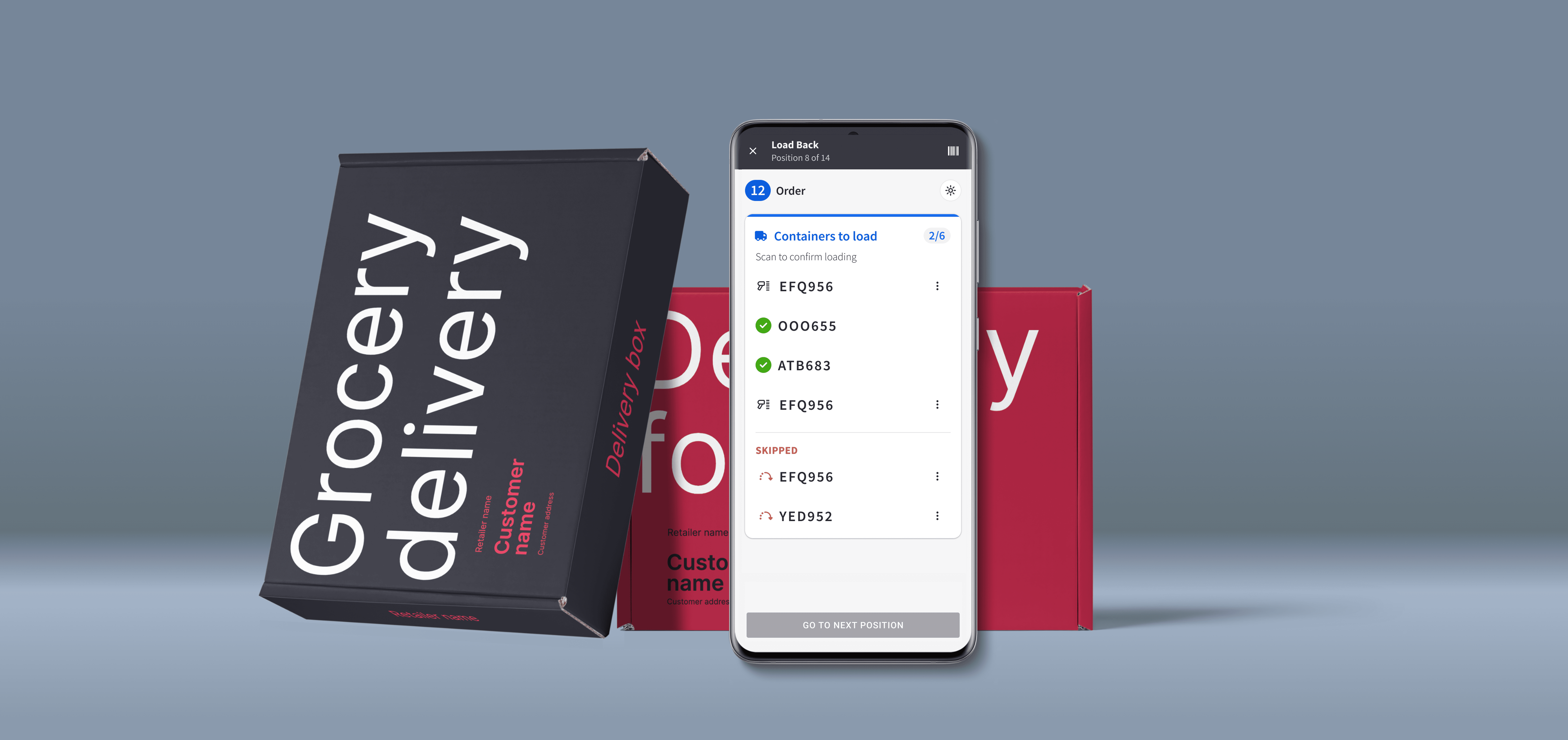
I redesigned a van loading workflow in an internal app used by store operatives fulfilling online grocery orders.
Working with PM, UX Researcher and Developers, we redesigned the new staging logic and loading flow.
Operational UX
Field research
Ideation
My role
Led end-to-end UX design for the redesigned algorithm
Defined the problem with PM and stakeholders
Conducted field research and usability testing
Explored and validated multiple solution directions
Facilitated decision-making between competing approaches
Problem
The existing approach required a lot of horizontal space in the stores, which was a problem for clients with limited storage.
The challenge was to reduce space usage without making the process harder to follow or more error-prone.
Solution
The final approach grouped containers by delivery timing to save space, while the app guided users through loading in a clearer way.
This created a better balance between space efficiency, loading speed, and operational accuracy.
Impact
Reduced horizontal staging space by around 50% or more, depending on the store type.
Freed up store space, allowing clients to handle more orders and products.
Created a clearer and less error-prone loading flow.
Van loading
I redesigned a van loading workflow in an internal app used by store operatives fulfilling online grocery orders.
Working with PM, UX Researcher and Developers, we redesigned the new staging logic and loading flow.
Operational UX
Field research
Ideation
My role
Led end-to-end UX design for the redesigned algorithm
Defined the problem with PM and stakeholders
Conducted field research and usability testing
Explored and validated multiple solution directions
Facilitated decision-making between competing approaches
Problem
The existing approach required a lot of horizontal space in the stores, which was a problem for clients with limited storage.
The challenge was to reduce space usage without making the process harder to follow or more error-prone.
Solution
The final approach grouped containers by delivery timing to save space, while the app guided users through loading in a clearer way.
This created a better balance between space efficiency, loading speed, and operational accuracy.
Impact
Reduced horizontal staging space by around 50% or more, depending on the store type.
Freed up store space, allowing clients to handle more orders and products.
Created a clearer and less error-prone loading flow.
Van loading
I redesigned a van loading workflow in an internal app used by store operatives fulfilling online grocery orders.
Working with PM, UX Researcher and Developers, we redesigned the new staging logic and loading flow.
Operational UX
Field research
Ideation
My role
Led end-to-end UX design for the redesigned algorithm
Defined the problem with PM and stakeholders
Conducted field research and usability testing
Explored and validated multiple solution directions
Facilitated decision-making between competing approaches
Problem
The existing approach required a lot of horizontal space in the stores, which was a problem for clients with limited storage.
The challenge was to reduce space usage without making the process harder to follow or more error-prone.
Solution
The final approach grouped containers by delivery timing to save space, while the app guided users through loading in a clearer way.
This created a better balance between space efficiency, loading speed, and operational accuracy.
Impact
Reduced horizontal staging space by around 50% or more, depending on the store type.
Freed up store space, allowing clients to handle more orders and products.
Created a clearer and less error-prone loading flow.
Background
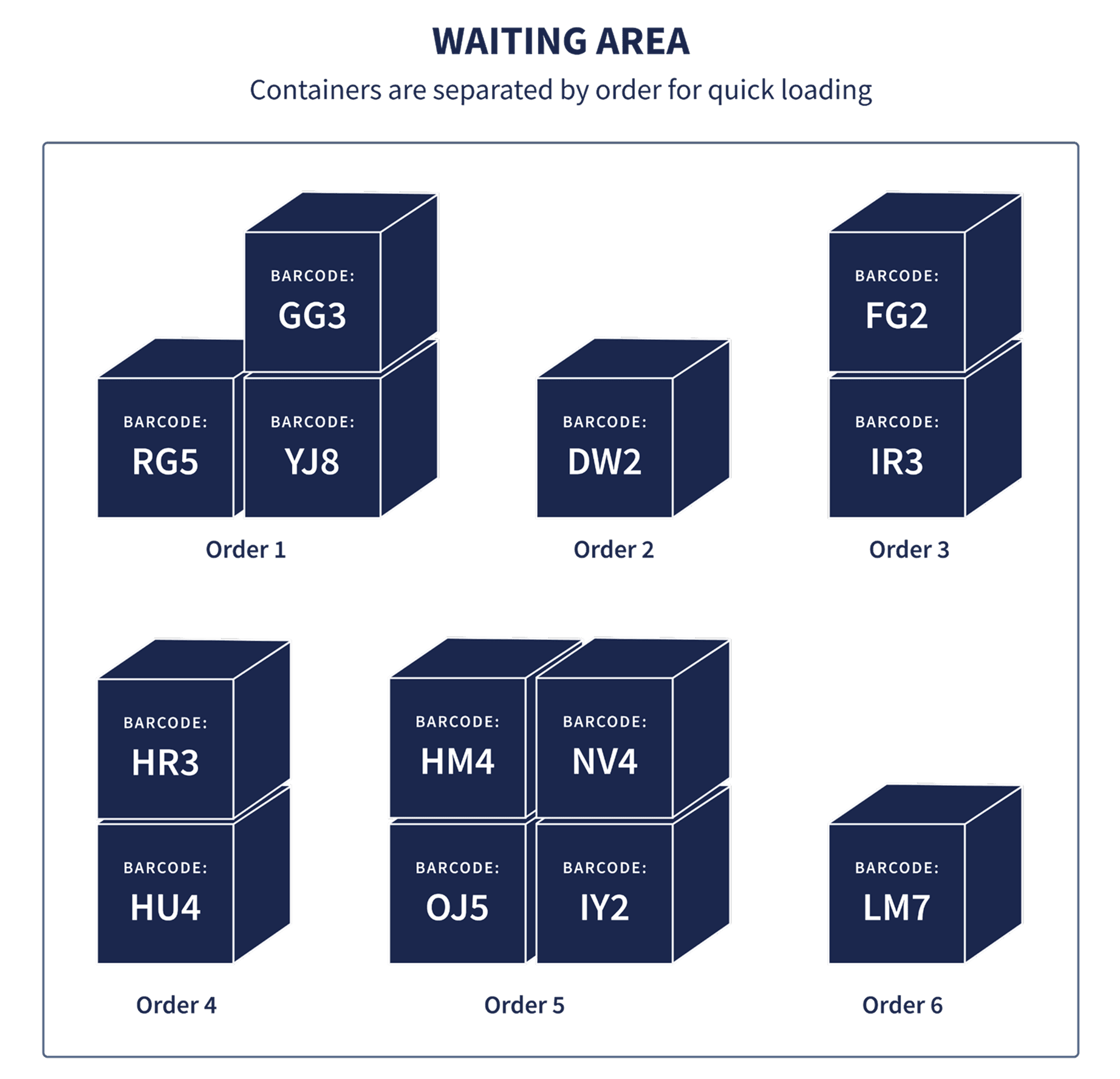
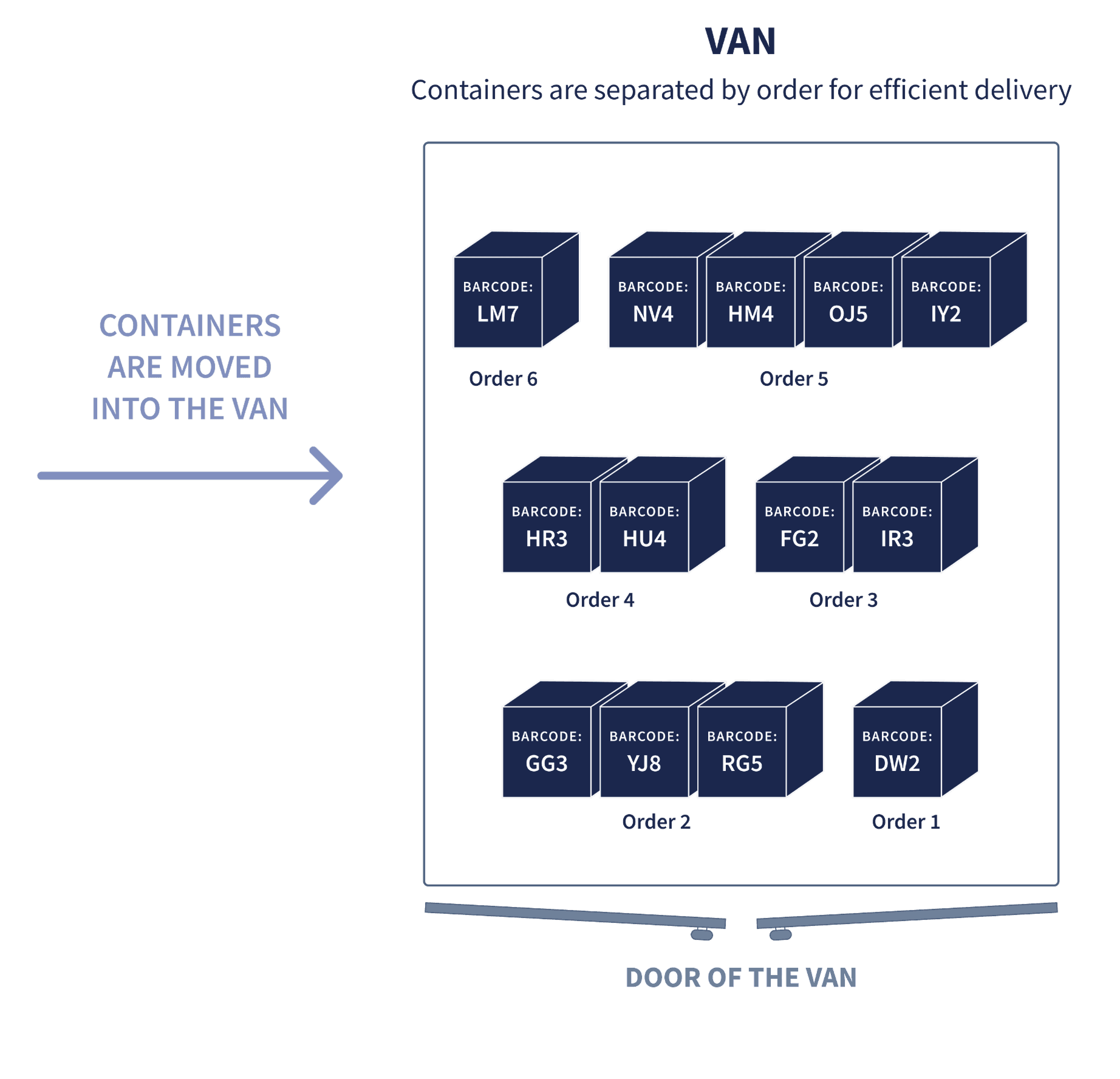
Before loading into the van, containers are stored at the back of the store.
In the existing approach, containers were separated by order so operatives could load them in the right sequence. This made loading efficient, but it required a large amount of horizontal space. There was also no digital flow to support operatives at this stage, which made the process difficult to track and more prone to errors.
Background
Before loading into the van, containers are stored at the back of the store.
In the existing approach, containers were separated by order so operatives could load them in the right sequence. This made loading efficient, but it required a large amount of horizontal space. There was also no digital flow to support operatives at this stage, which made the process difficult to track and more prone to errors.
Background
Before loading into the van, containers are stored at the back of the store.
In the existing approach, containers were separated by order so operatives could load them in the right sequence. This made loading efficient, but it required a large amount of horizontal space. There was also no digital flow to support operatives at this stage, which made the process difficult to track and more prone to errors.
Challenge
Feedback from clients and users helped uncover the main pain points behind the problem.
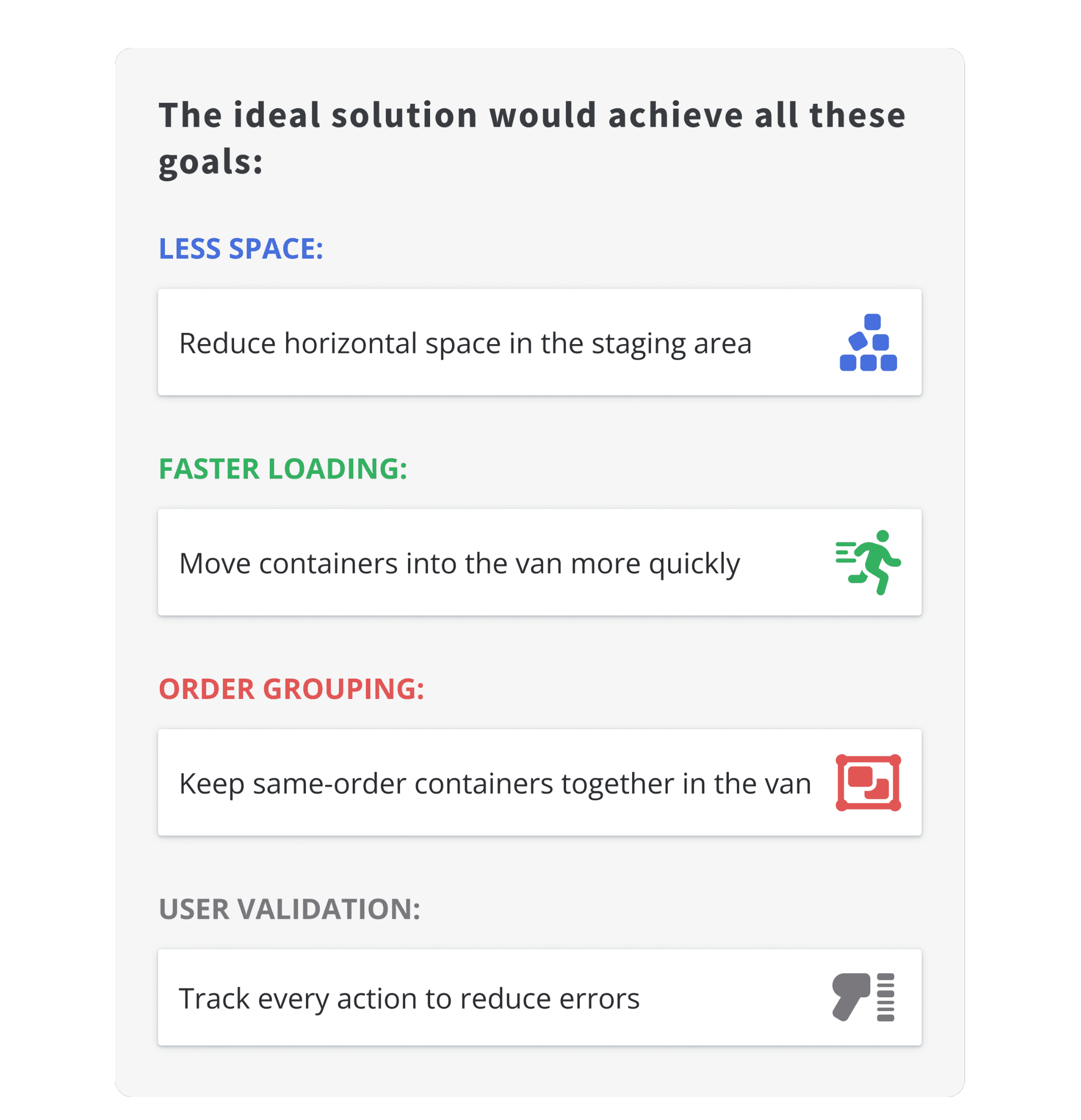
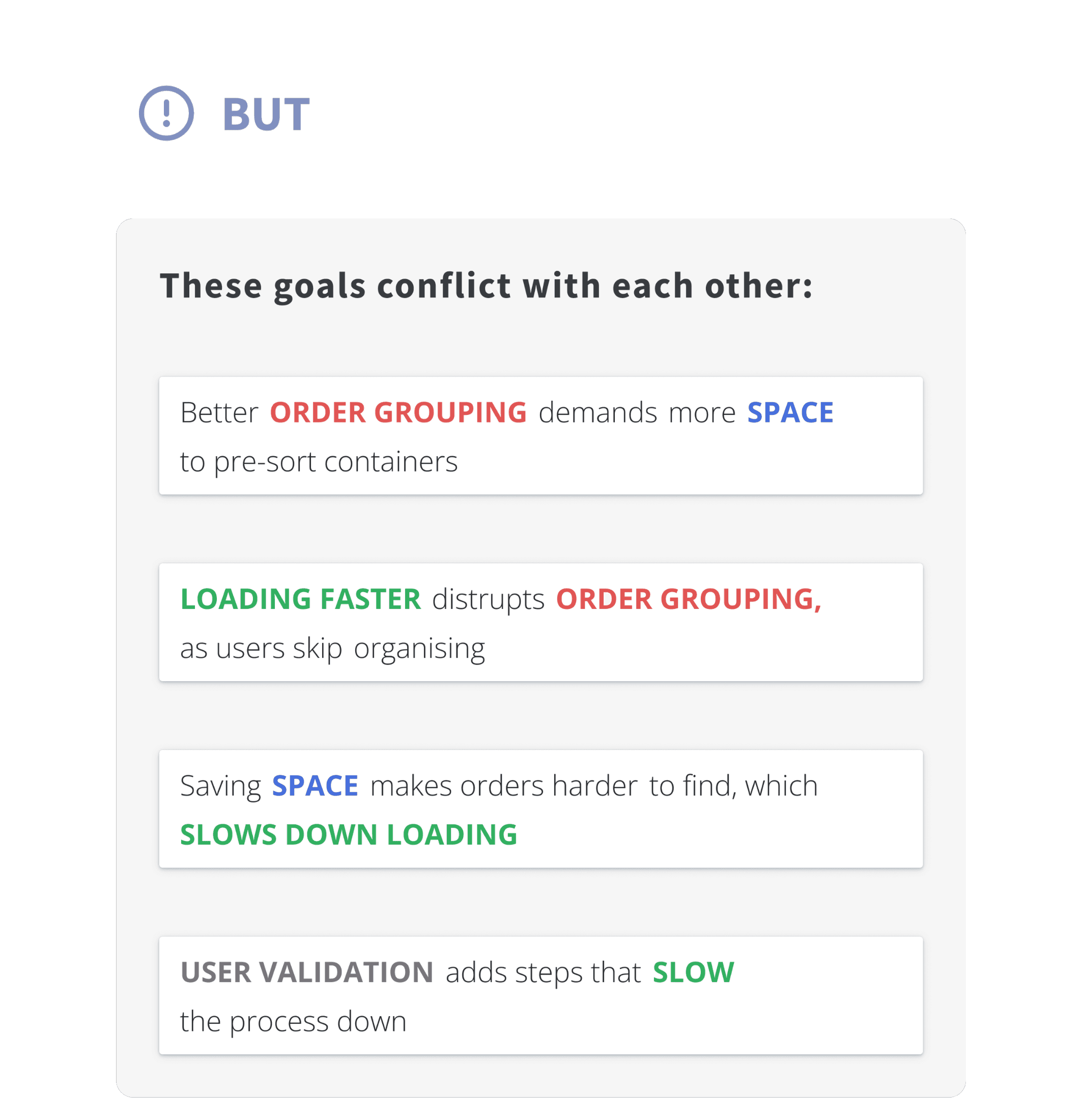
From this, I defined four core requirements that shaped the project. I also mapped how they were connected and how each one affected the others.
Understanding the priorities and trade-offs between these requirements guided the overall direction of the project.
Challenge
Feedback from clients and users helped uncover the main pain points behind the problem.
From this, I defined four core requirements that shaped the project. I also mapped how they were connected and how each one affected the others.
Understanding the priorities and trade-offs between these requirements guided the overall direction of the project.
Challenge
Feedback from clients and users helped uncover the main pain points behind the problem.
From this, I defined four core requirements that shaped the project. I also mapped how they were connected and how each one affected the others.
Understanding the priorities and trade-offs between these requirements guided the overall direction of the project.
Space challenge
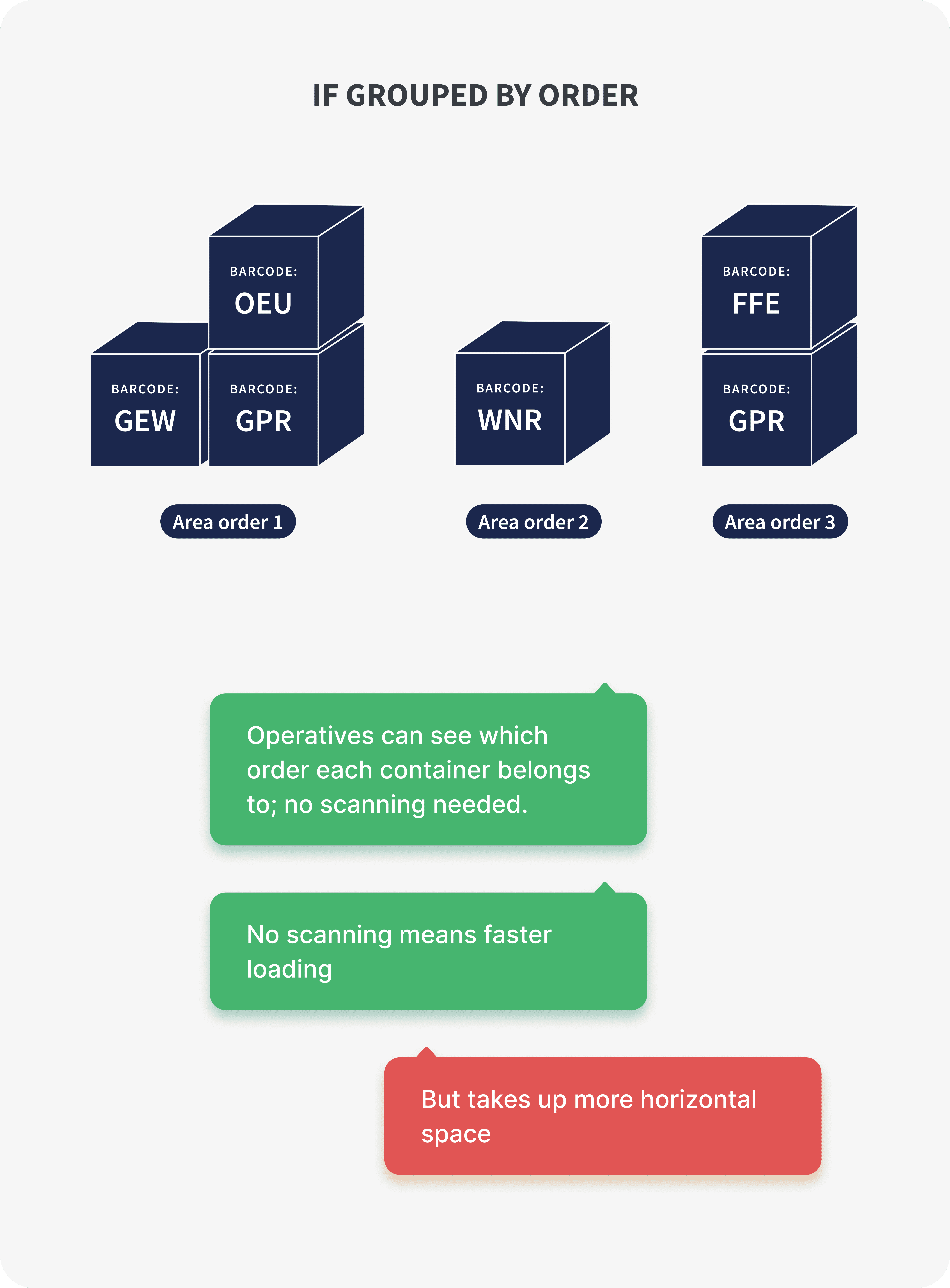
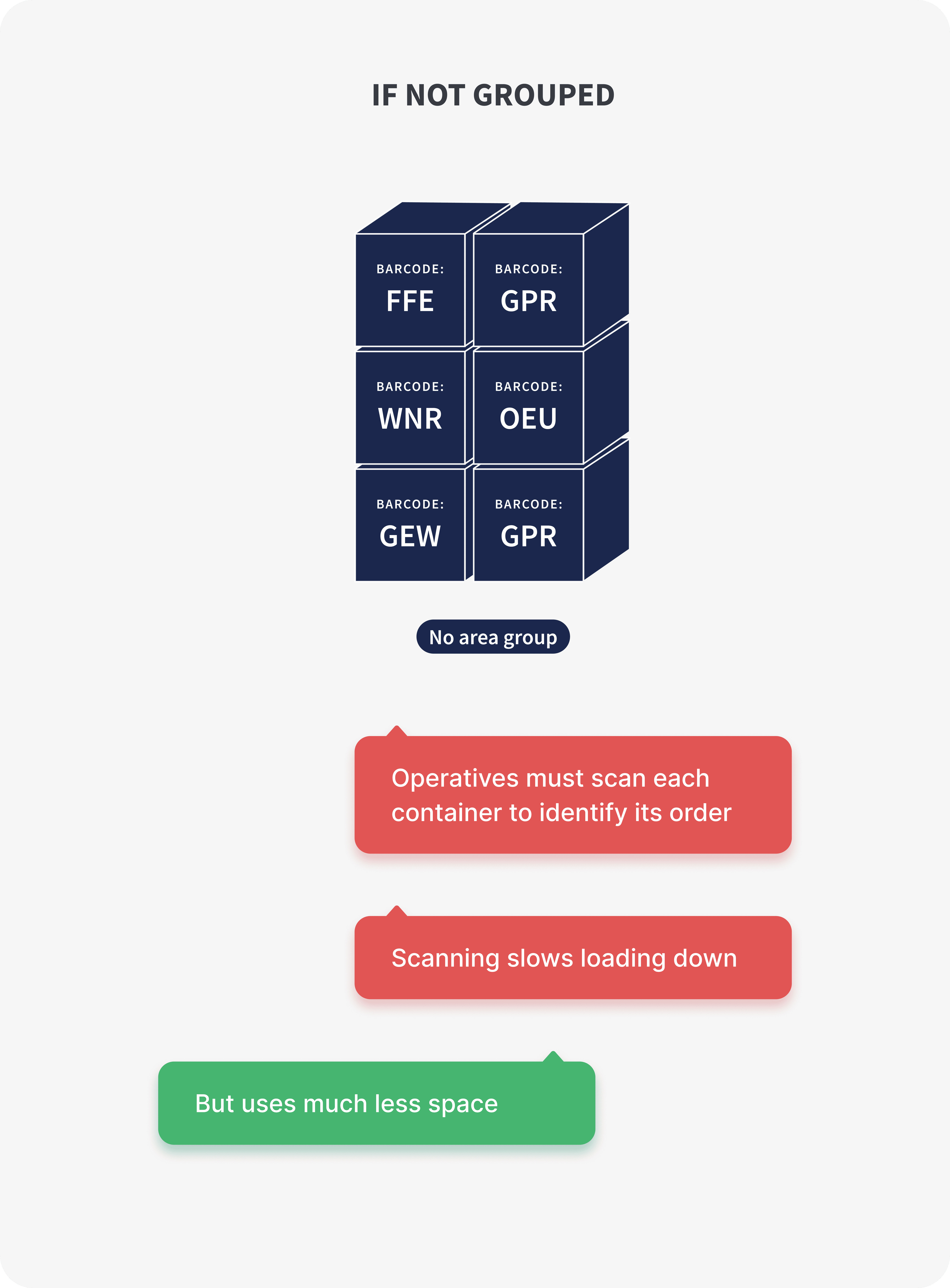
Space was the most critical factor to understand, as it was the main pain point raised by clients.
Space challenge
Space was the most critical factor to understand, as it was the main pain point raised by clients.
Space challenge
Space was the most critical factor to understand, as it was the main pain point raised by clients.
Exploring ideas
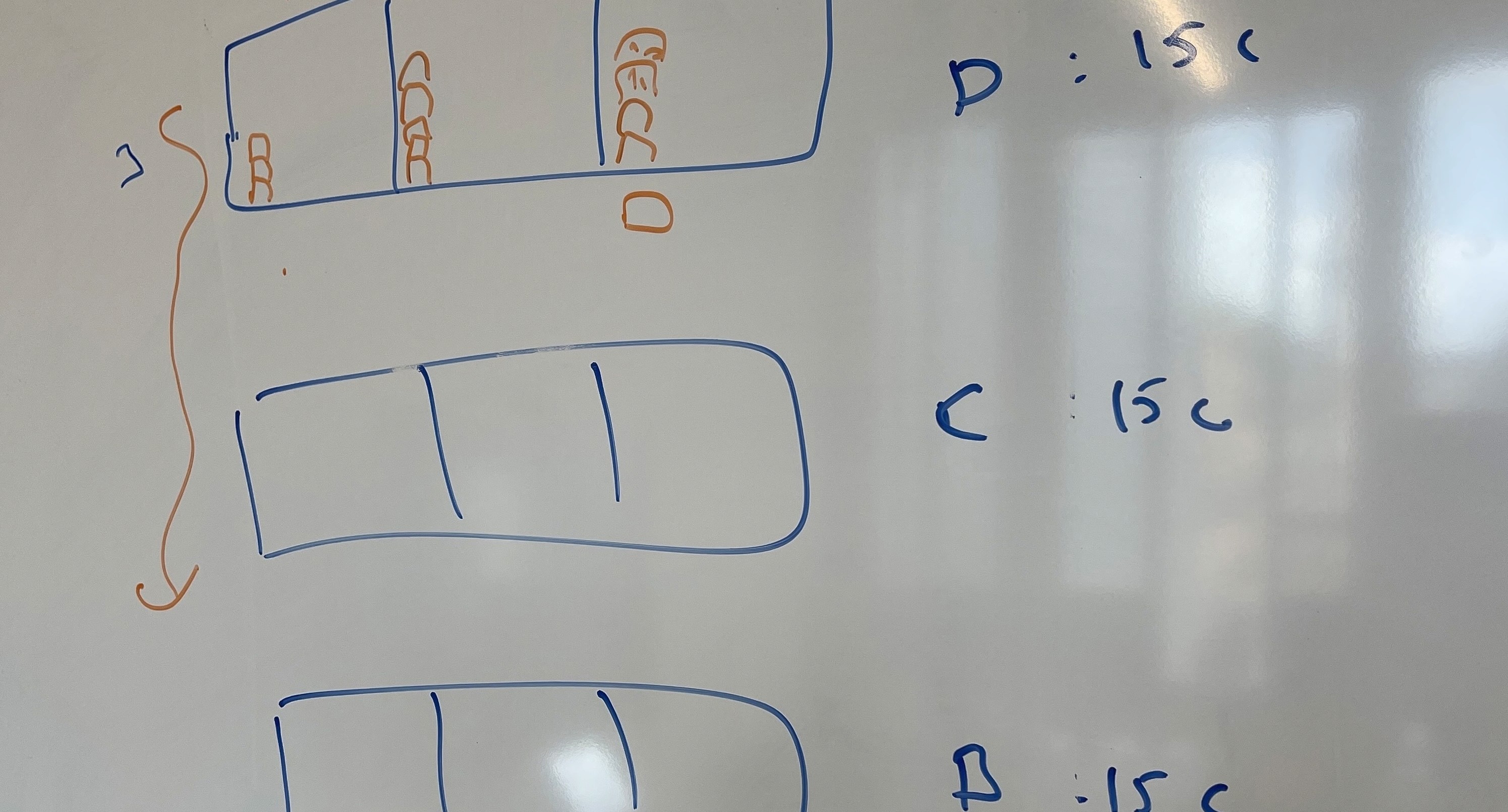
After clarifying the problem, the PM and I explored ideas separately and then combined them.
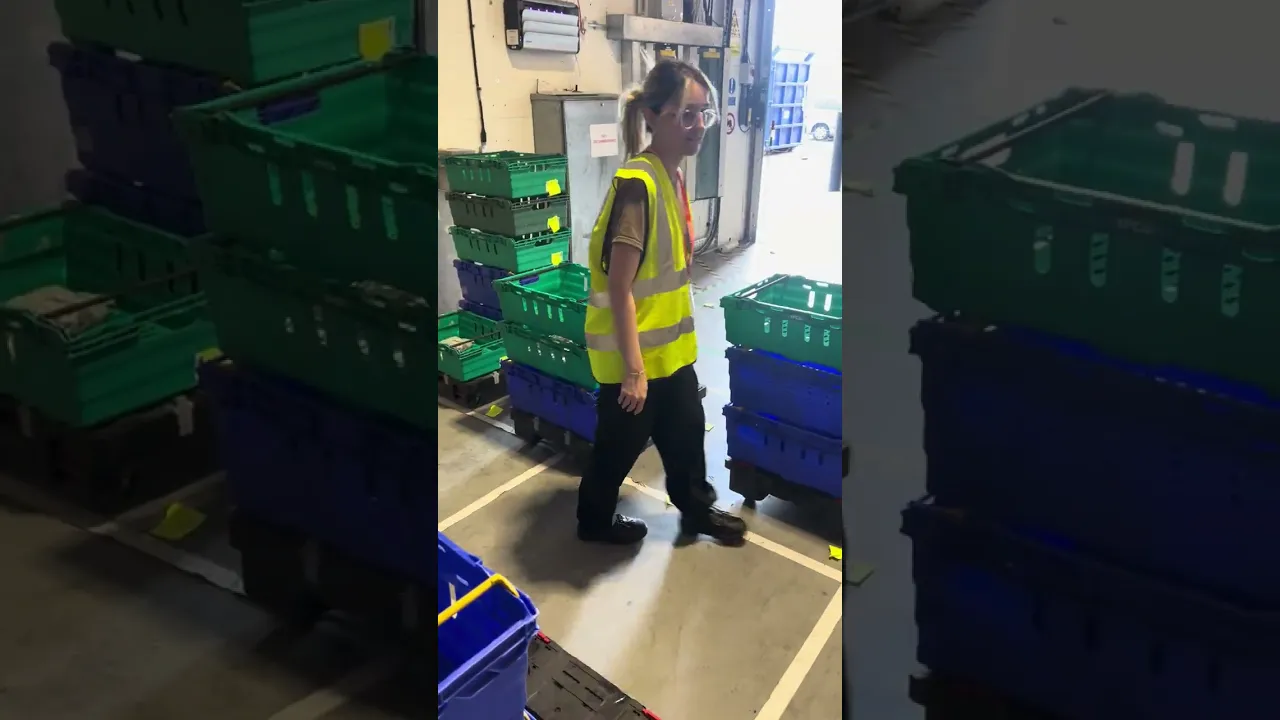
Before committing to a direction, we visited a warehouse to test the ideas ourselves.
Experiencing the process first-hand gave me a much clearer understanding of the physical and mental effort involved in handling, finding, and tracking containers at speed.
Based on these experiments, we selected two ideas to explore further.
Exploring ideas
After clarifying the problem, the PM and I explored ideas separately and then combined them.
Before committing to a direction, we visited a warehouse to test the ideas ourselves.
Experiencing the process first-hand gave me a much clearer understanding of the physical and mental effort involved in handling, finding, and tracking containers at speed.
Based on these experiments, we selected two ideas to explore further.
Exploring ideas
After clarifying the problem, the PM and I explored ideas separately and then combined them.
Before committing to a direction, we visited a warehouse to test the ideas ourselves.
Experiencing the process first-hand gave me a much clearer understanding of the physical and mental effort involved in handling, finding, and tracking containers at speed.
Based on these experiments, we selected two ideas to explore further.
Chosen ideas
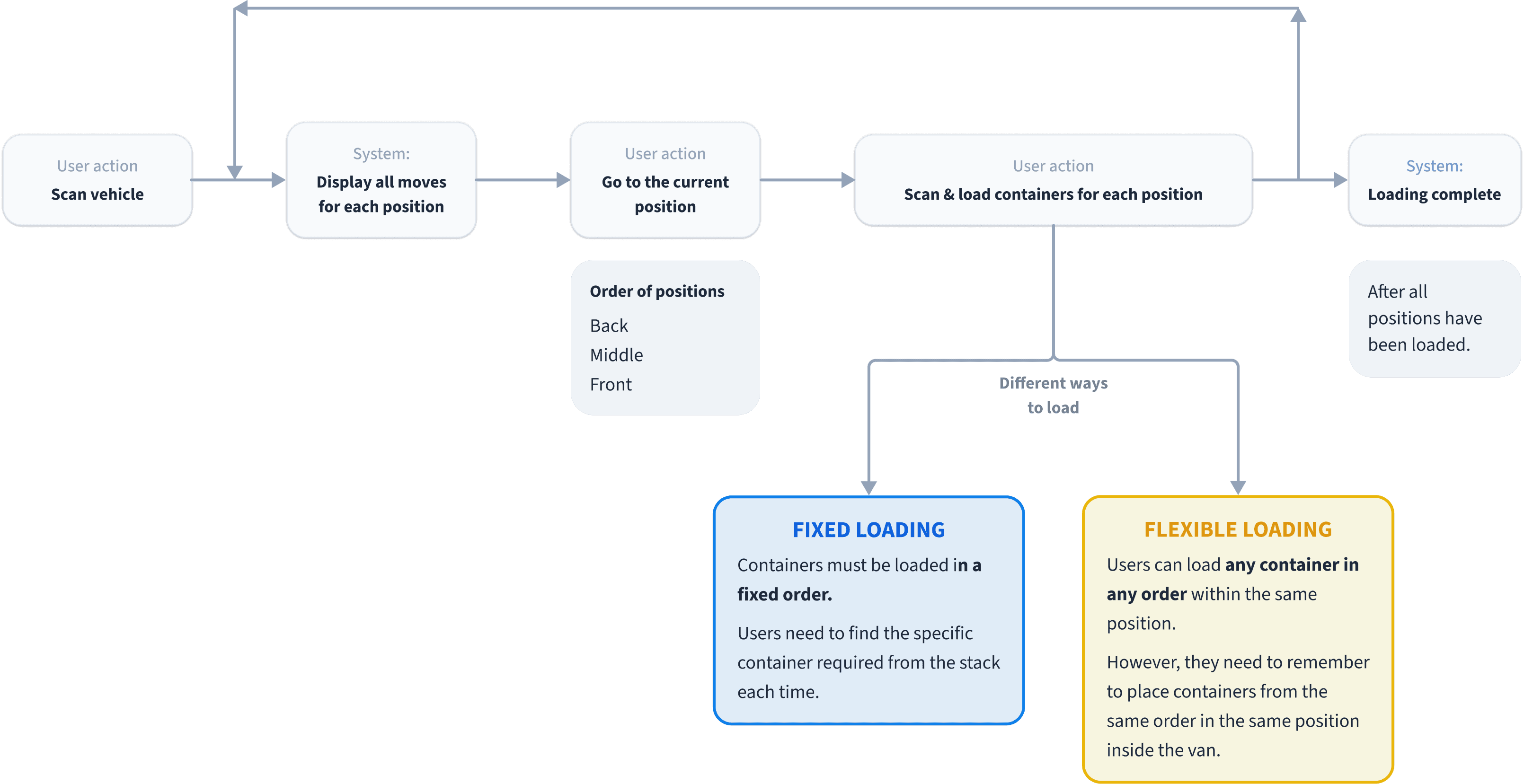
Two final ideas share the same core logic:
Containers are split into three waiting areas
This reduces space usage by more than 50%
Containers are grouped by delivery timing: earlier with earlier, later with later
App helps operatives separate containers by order during loading
We chose this approach because it keeps space smaller and more predictable while keeping some structure. If operatives need to work faster, some mixing is still acceptable because orders can only be mixed with others in a similar delivery-timing group. This was an acceptable trade-off for clients.
Chosen ideas
Two final ideas share the same core logic:
Containers are split into three waiting areas
This reduces space usage by more than 50%
Containers are grouped by delivery timing: earlier with earlier, later with later
App helps operatives separate containers by order during loading
We chose this approach because it keeps space smaller and more predictable while keeping some structure. If operatives need to work faster, some mixing is still acceptable because orders can only be mixed with others in a similar delivery-timing group. This was an acceptable trade-off for clients.
Chosen ideas
Two final ideas share the same core logic:
Containers are split into three waiting areas
This reduces space usage by more than 50%
Containers are grouped by delivery timing: earlier with earlier, later with later
App helps operatives separate containers by order during loading
We chose this approach because it keeps space smaller and more predictable while keeping some structure. If operatives need to work faster, some mixing is still acceptable because orders can only be mixed with others in a similar delivery-timing group. This was an acceptable trade-off for clients.
Comparing ideas
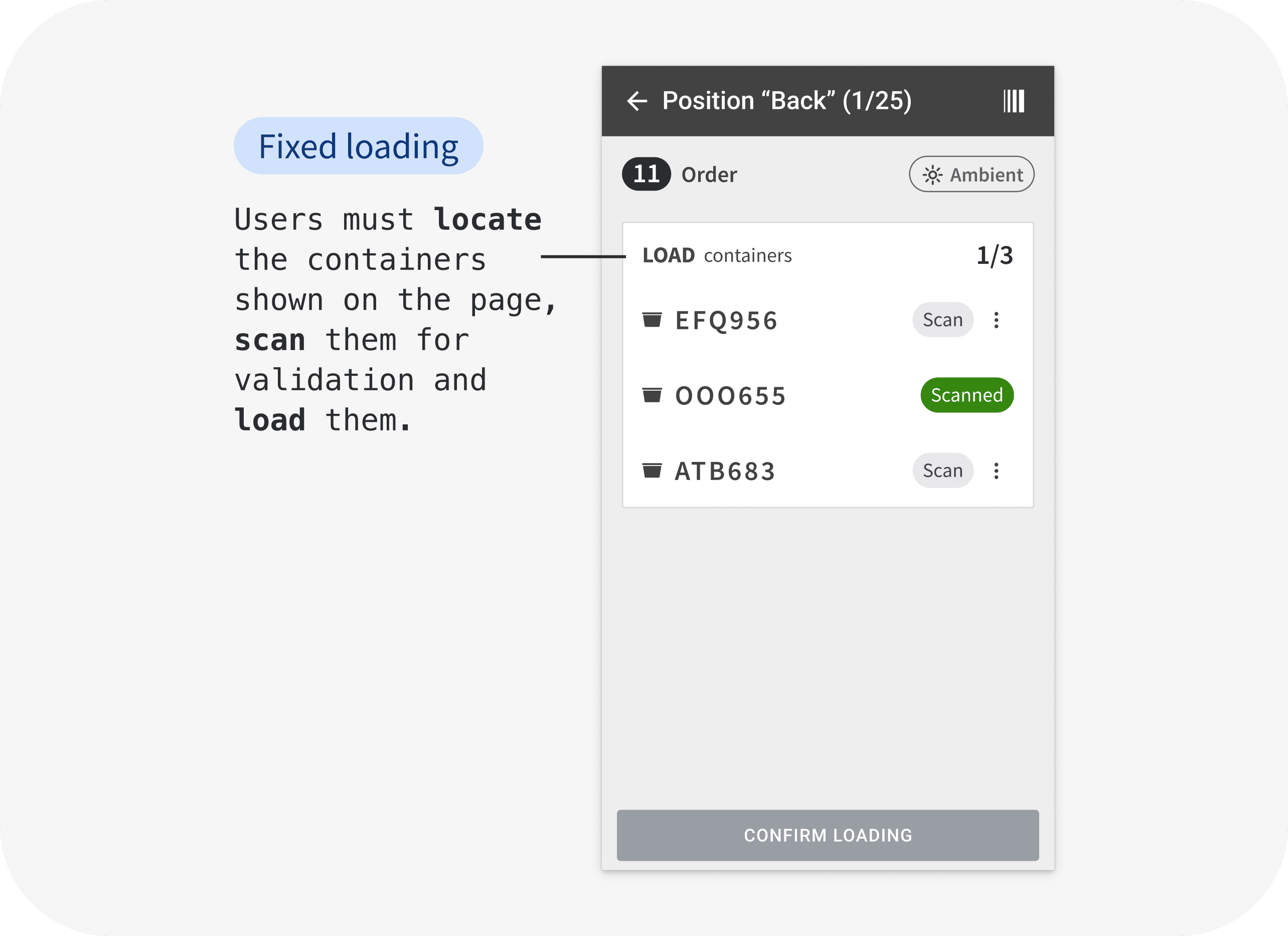
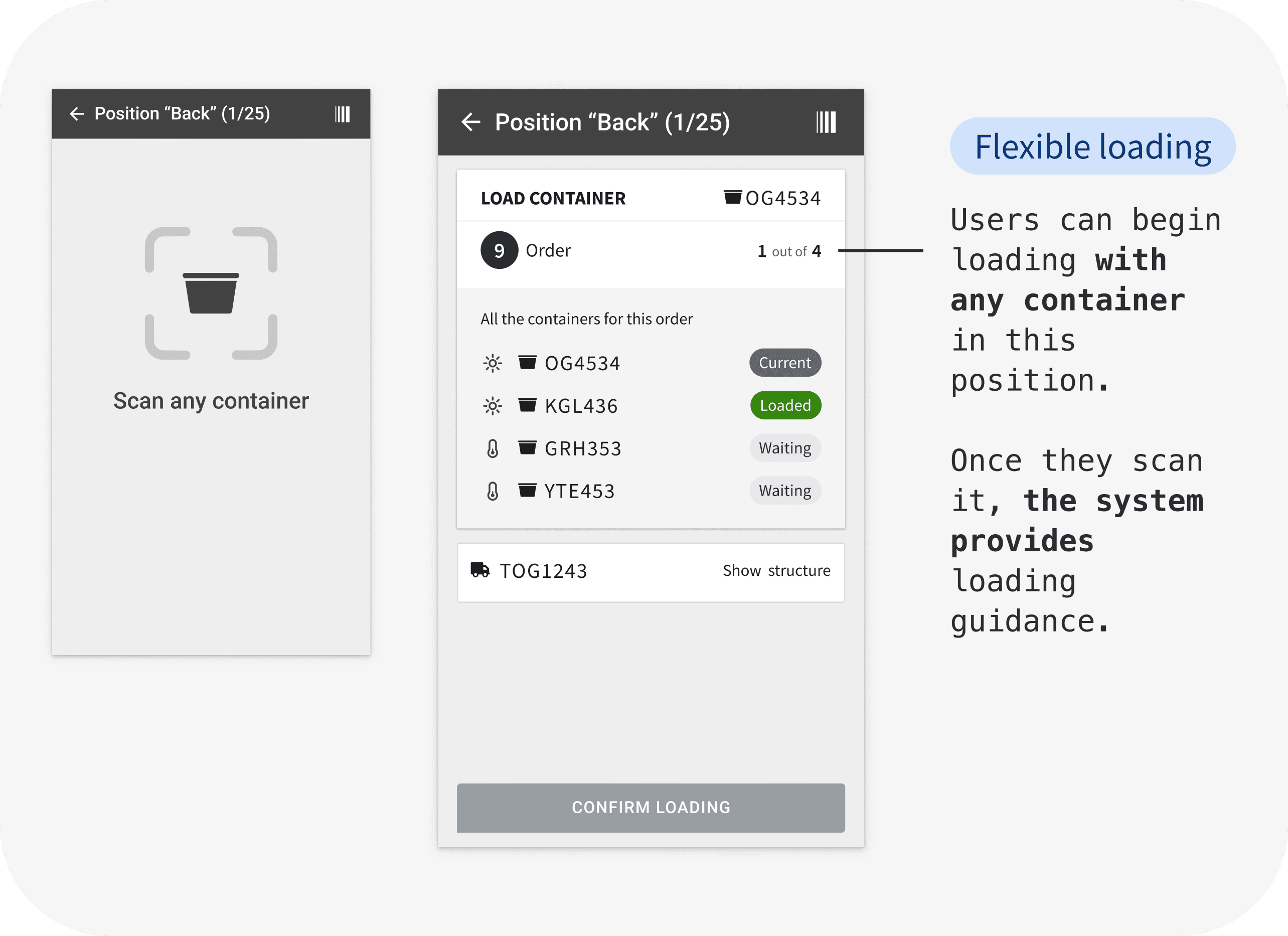
The two approaches differed in how they helped operatives separate orders during loading.
For both ideas, I created wireframes and prototypes to support discussions with stakeholders.
Comparing ideas
The two approaches differed in how they helped operatives separate orders during loading.
For both ideas, I created wireframes and prototypes to support discussions with stakeholders.
Comparing ideas
The two approaches differed in how they helped operatives separate orders during loading.
For both ideas, I created wireframes and prototypes to support discussions with stakeholders.
Testing & validation
To test our initial designs, I partnered with our UX Researcher. I created the flows and worked closely with them to shape how each concept would be tested.
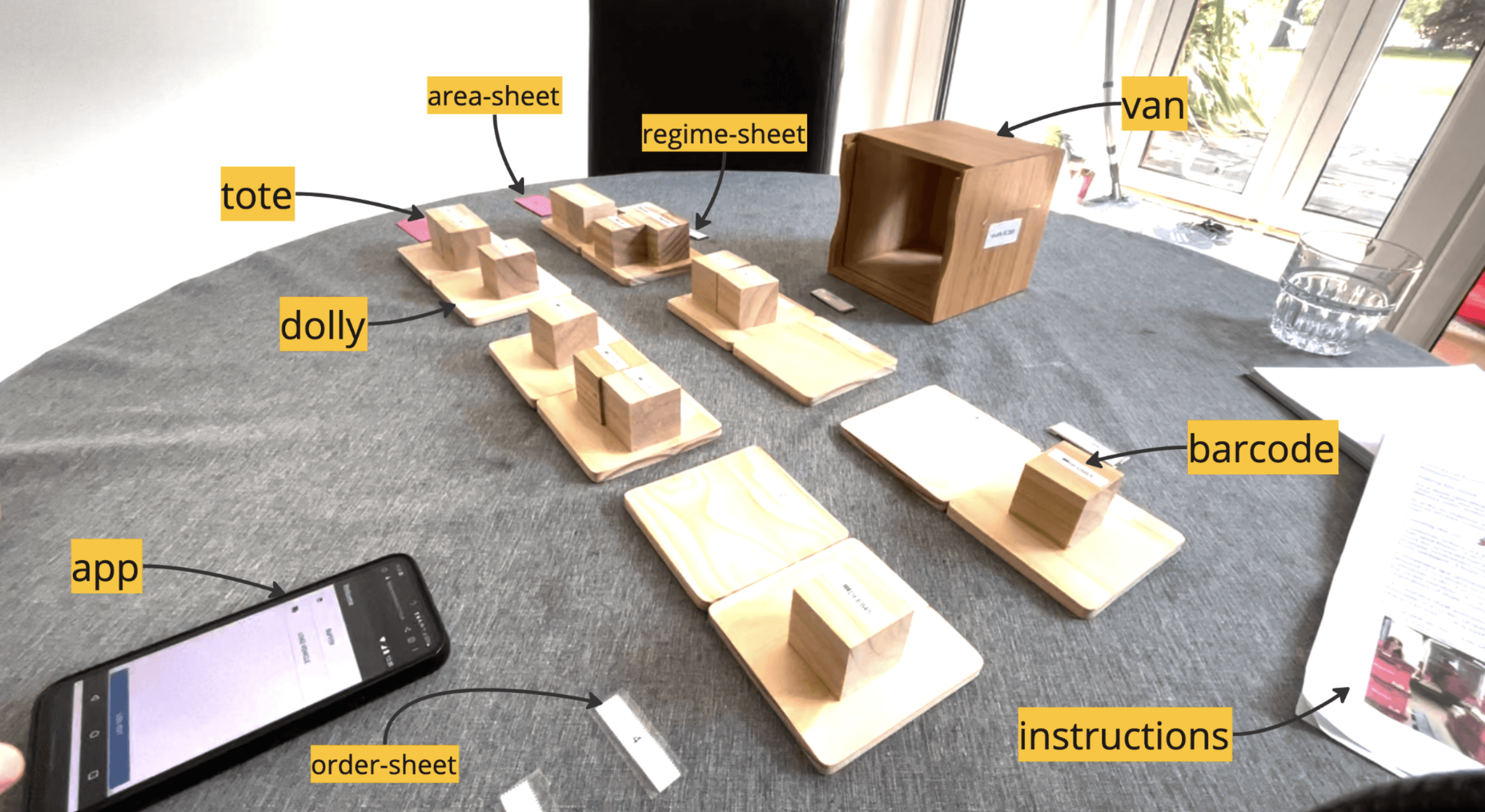
Without access to a real store, we simulated the process in the office using LEGO-like props. The researcher then ran the sessions with participants.
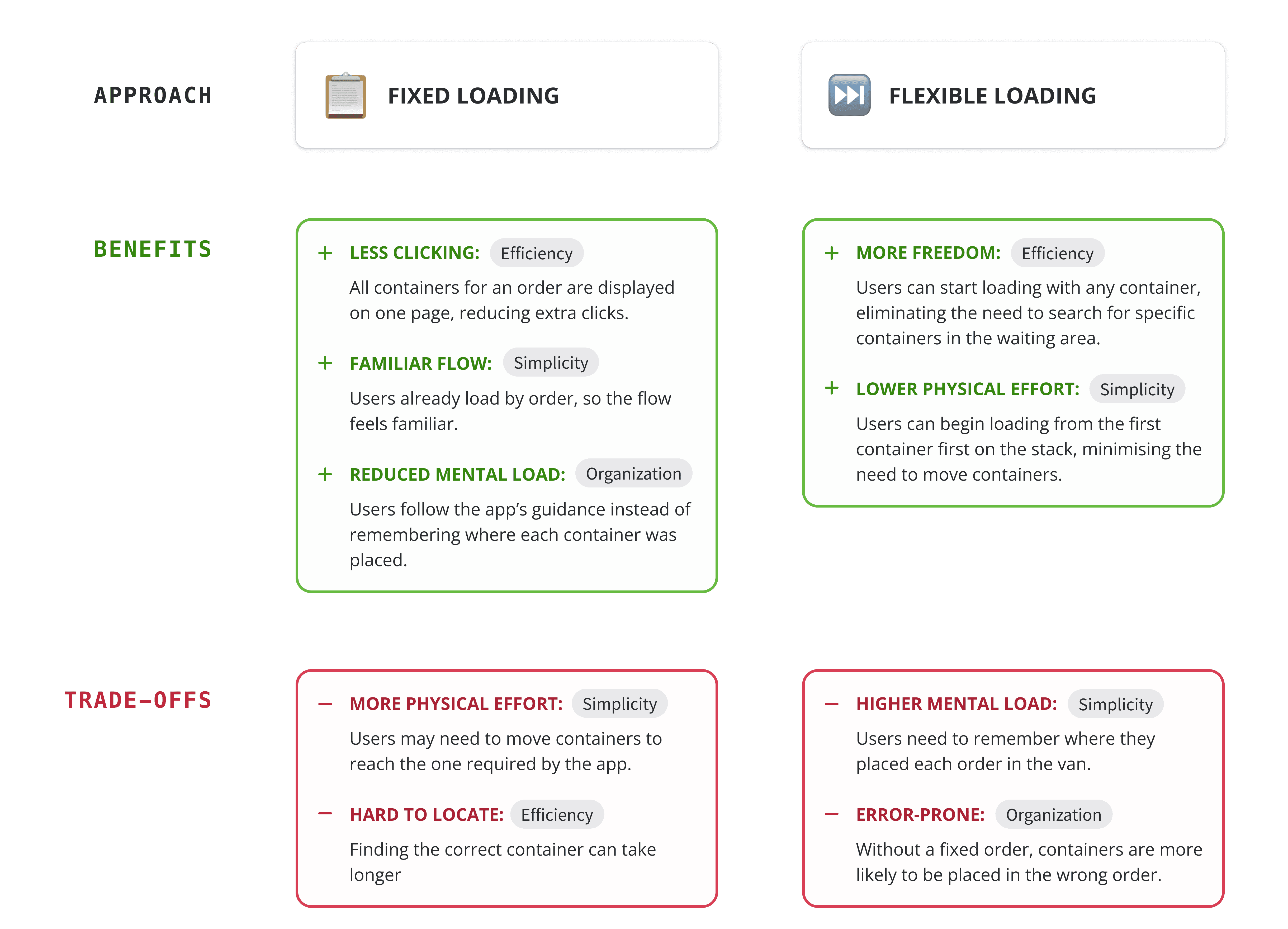
Testing showed that fixed loading was easier for participants to understand and follow. It reduced decision-making during loading by clearly telling users what to find next. The sessions also helped refine labels, wording, and guidance in the final flow.
Testing & validation
To test our initial designs, I partnered with our UX Researcher. I created the flows and worked closely with them to shape how each concept would be tested.
Without access to a real store, we simulated the process in the office using LEGO-like props. The researcher then ran the sessions with participants.
Testing showed that fixed loading was easier for participants to understand and follow. It reduced decision-making during loading by clearly telling users what to find next. The sessions also helped refine labels, wording, and guidance in the final flow.
Testing & validation
To test our initial designs, I partnered with our UX Researcher. I created the flows and worked closely with them to shape how each concept would be tested.
Without access to a real store, we simulated the process in the office using LEGO-like props. The researcher then ran the sessions with participants.
Testing showed that fixed loading was easier for participants to understand and follow. It reduced decision-making during loading by clearly telling users what to find next. The sessions also helped refine labels, wording, and guidance in the final flow.
Final direction
After several stakeholder discussions on prototypes, fixed loading emerged as the preferred option, and testing with our UX Researcher confirmed this direction.
While it can require more moving containers around, it doesn't happen every time and it offers a clearer and less error-prone process.
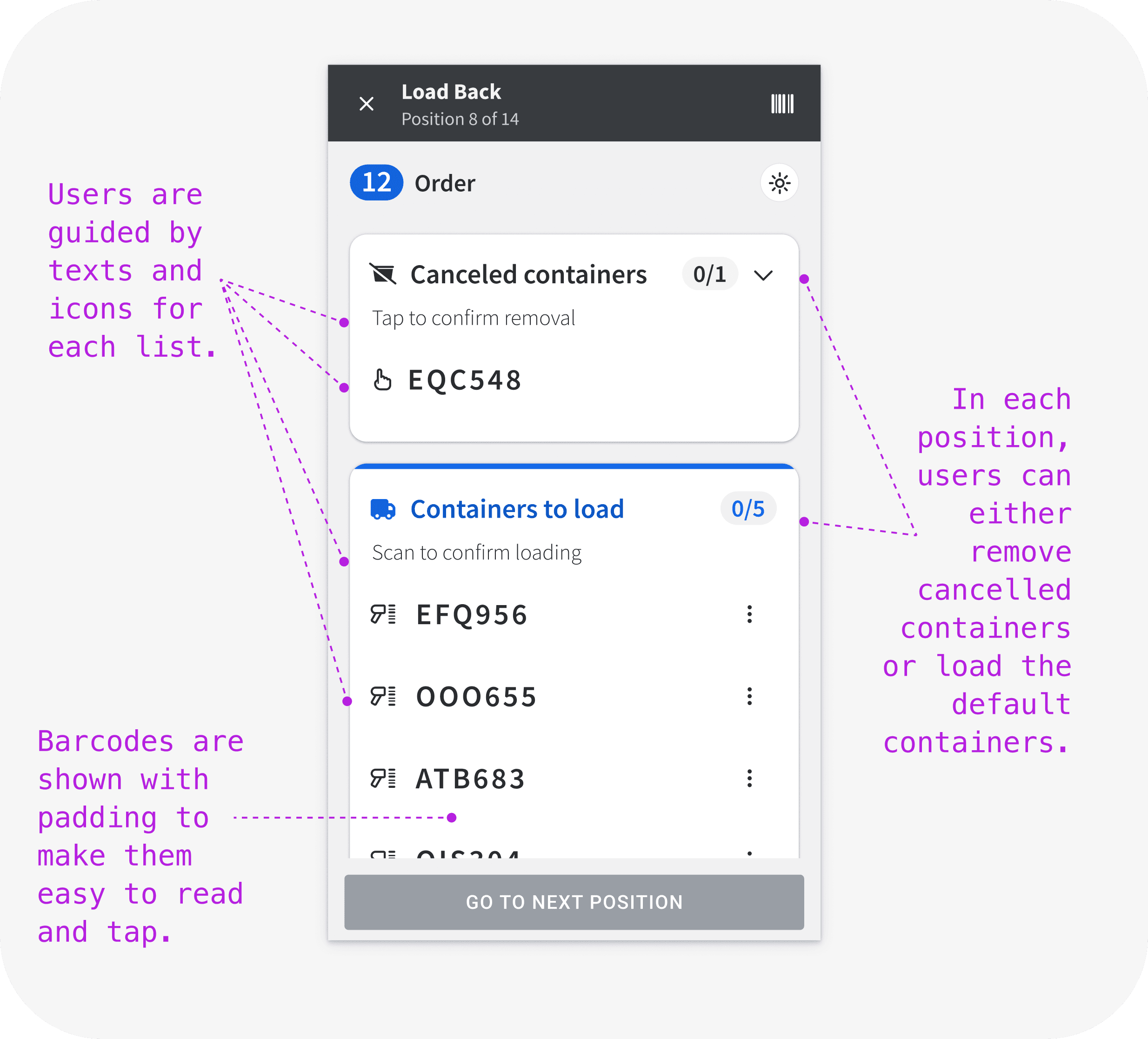
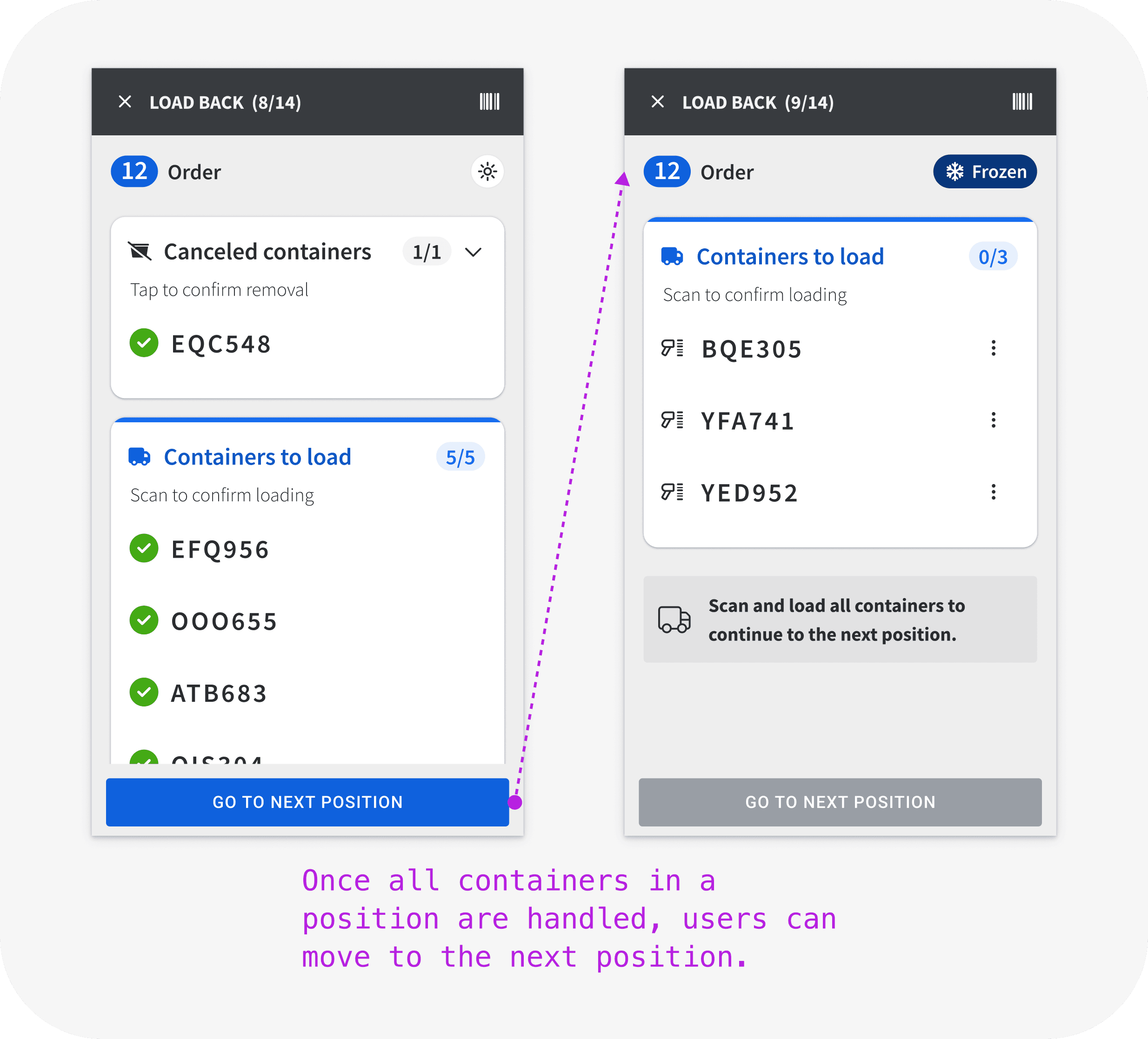
Finally, I finalised the high-fidelity designs for the new flow, staying aligned with the design system and working closely with developers.
Final direction
After several stakeholder discussions on prototypes, fixed loading emerged as the preferred option, and testing with our UX Researcher confirmed this direction.
While it can require more moving containers around, it doesn't happen every time and it offers a clearer and less error-prone process.
Finally, I finalised the high-fidelity designs for the new flow, staying aligned with the design system and working closely with developers.
Final direction
After several stakeholder discussions on prototypes, fixed loading emerged as the preferred option, and testing with our UX Researcher confirmed this direction.
While it can require more moving containers around, it doesn't happen every time and it offers a clearer and less error-prone process.
Finally, I finalised the high-fidelity designs for the new flow, staying aligned with the design system and working closely with developers.
Impact
The new loading process rolled out across over 500 stores and multiple clients.
For some stores, the new approach reduced horizontal staging space more than 50%, addressing the capacity constraint clients had raised. Loading could be slightly slower in these cases, but clients accepted the trade-off for a more predictable process and significantly less space used.
The solution also added tracking of operatives' actions and container locations, closing a known gap that had previously caused lost containers and delivery delays.
User feedback from stores showed that the new process was easier to understand and follow, supporting both speed and accuracy in a high-pressure environment.
We also designed the solution to be modular so stores could adopt what suited them. For stores without space constraints, we offered the tracking layer separately. This allowed them to keep their existing staging setup while adding action tracking to reduce errors and incidents.
Impact
The new loading process rolled out across over 500 stores and multiple clients.
For some stores, the new approach reduced horizontal staging space more than 50%, addressing the capacity constraint clients had raised. Loading could be slightly slower in these cases, but clients accepted the trade-off for a more predictable process and significantly less space used.
The solution also added tracking of operatives' actions and container locations, closing a known gap that had previously caused lost containers and delivery delays.
User feedback from stores showed that the new process was easier to understand and follow, supporting both speed and accuracy in a high-pressure environment.
We also designed the solution to be modular so stores could adopt what suited them. For stores without space constraints, we offered the tracking layer separately. This allowed them to keep their existing staging setup while adding action tracking to reduce errors and incidents.
Impact
The new loading process rolled out across over 500 stores and multiple clients.
For some stores, the new approach reduced horizontal staging space more than 50%, addressing the capacity constraint clients had raised. Loading could be slightly slower in these cases, but clients accepted the trade-off for a more predictable process and significantly less space used.
The solution also added tracking of operatives' actions and container locations, closing a known gap that had previously caused lost containers and delivery delays.
User feedback from stores showed that the new process was easier to understand and follow, supporting both speed and accuracy in a high-pressure environment.
We also designed the solution to be modular so stores could adopt what suited them. For stores without space constraints, we offered the tracking layer separately. This allowed them to keep their existing staging setup while adding action tracking to reduce errors and incidents.
Reflection
This project was successful because we built a strong understanding of the problem before finalising the solution. Testing the process ourselves, validating designs with participants, and reviewing details with stakeholders helped us understand the trade-offs clearly and make confident design decisions.
One of the biggest takeaways was learning how to present competing benefits to stakeholders in a way that helped them make informed decisions rather than just picking the option that sounded best.
If I worked on it again, I would involve a wider group earlier in the ideation stage. We had to move quickly, so the initial exploration happened in a smaller group, but for a redesign of such a core feature, a broader session would have been valuable.
Reflection
This project was successful because we built a strong understanding of the problem before finalising the solution. Testing the process ourselves, validating designs with participants, and reviewing details with stakeholders helped us understand the trade-offs clearly and make confident design decisions.
One of the biggest takeaways was learning how to present competing benefits to stakeholders in a way that helped them make informed decisions rather than just picking the option that sounded best.
If I worked on it again, I would involve a wider group earlier in the ideation stage. We had to move quickly, so the initial exploration happened in a smaller group, but for a redesign of such a core feature, a broader session would have been valuable.
Reflection
This project was successful because we built a strong understanding of the problem before finalising the solution. Testing the process ourselves, validating designs with participants, and reviewing details with stakeholders helped us understand the trade-offs clearly and make confident design decisions.
One of the biggest takeaways was learning how to present competing benefits to stakeholders in a way that helped them make informed decisions rather than just picking the option that sounded best.
If I worked on it again, I would involve a wider group earlier in the ideation stage. We had to move quickly, so the initial exploration happened in a smaller group, but for a redesign of such a core feature, a broader session would have been valuable.
Read next
Read next
Read next